November
Sisters, care, geology, philosophy, politics and food
“There’s ways to survive these times….., and I think one way is the shape the telling takes.” From Spring by Ali Smith
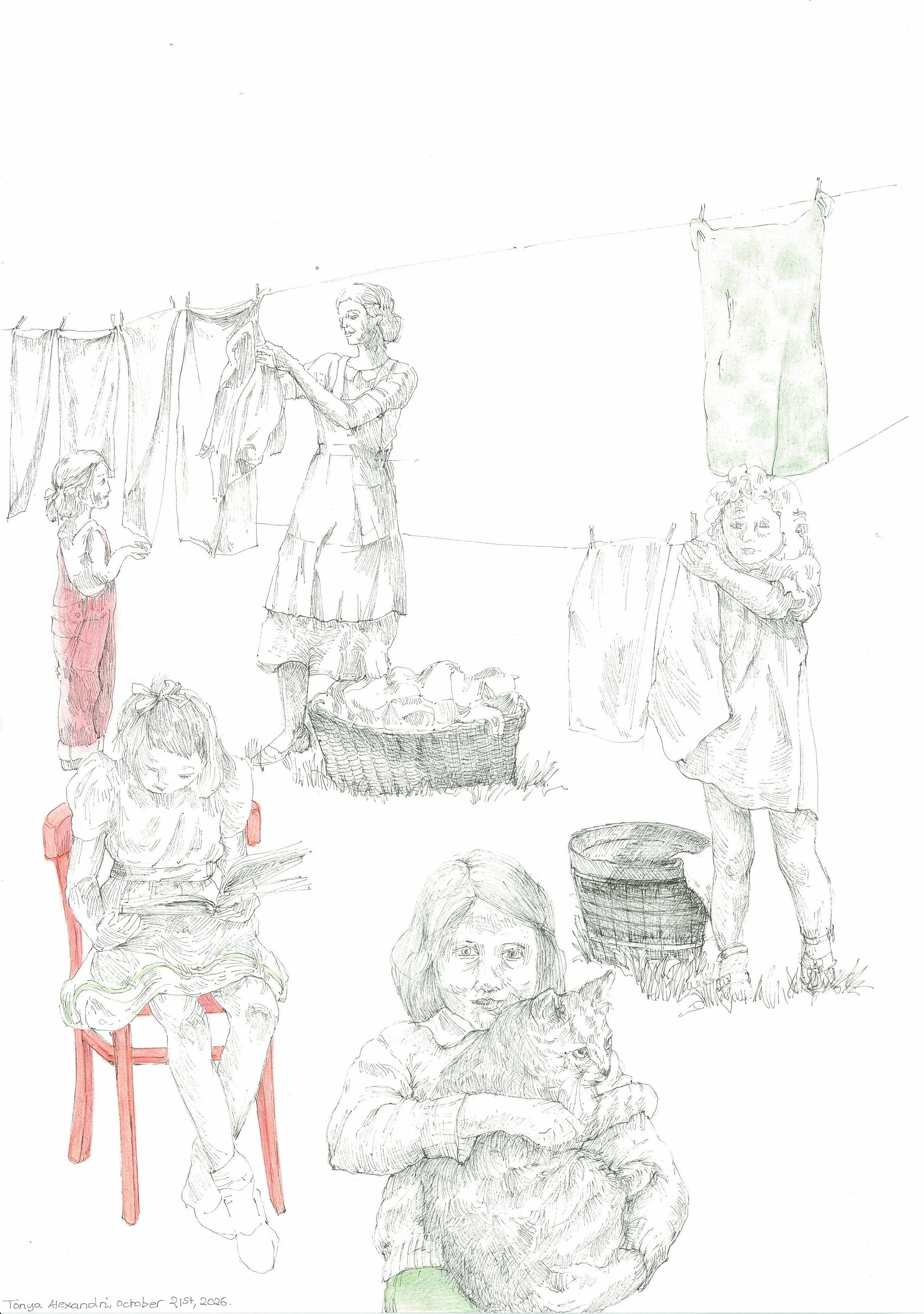 Today’s post is about The Alternatives, a novel by Irish writer, Caoilinn Hughes, published in 2024. It’s a story about four early orphaned sisters, all in their thirties, all with PhDs, all striving to do meaningful work, all concerned about the planetary challenges of our times, and although not estranged, leading divergent, distanced lives, in Ireland, London and America. It’s a complex novel that plays with form and intertwines family relationships and dynamics with concepts and ideas, and feels very timely, as it tackles all the basic challenges that we are confronted with today, from climate change to food sustainability, democracy, equity and need for political change, health care, education and the commercialization of universities, to family dynamics, sisterhood, trauma and loss, and how that has shaped the four main characters and their relationship. The connecting thread that runs throughout the book is care, a theme that the writer explores through each character, as each sister, but also the other characters that inhabit the pages of this book, engage in small or big caring acts and participate in community in their own ways. There’s an abundance of metaphors and analogies, and a wide scope of themes, as each sister in some sense represents a larger narrative or aspect of our collective grappling with global crises, which makes for an extrememely layered reading experience. However, although the book explores heavy, difficult material, its humor and funny bits provide a sense of comic relief.
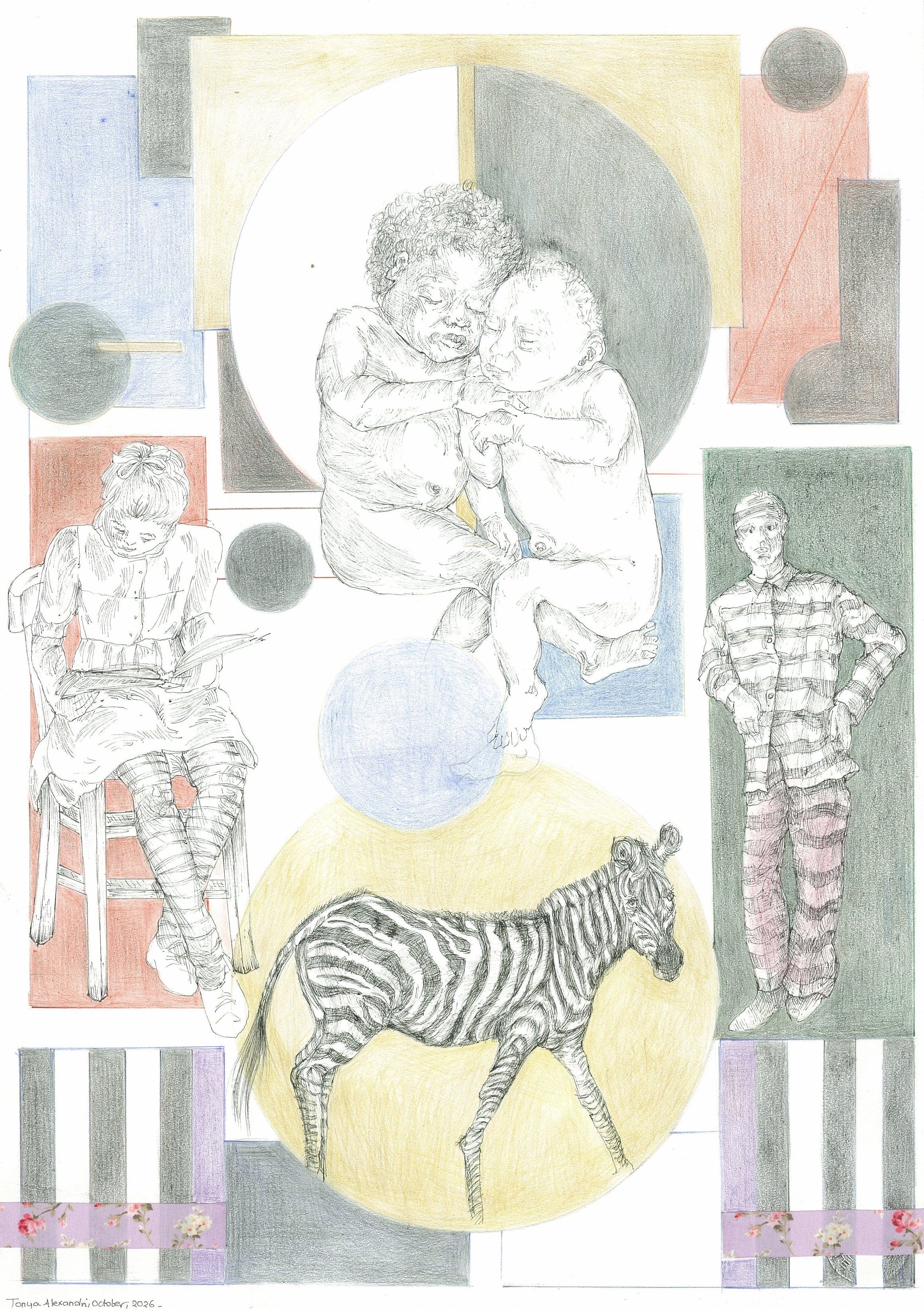
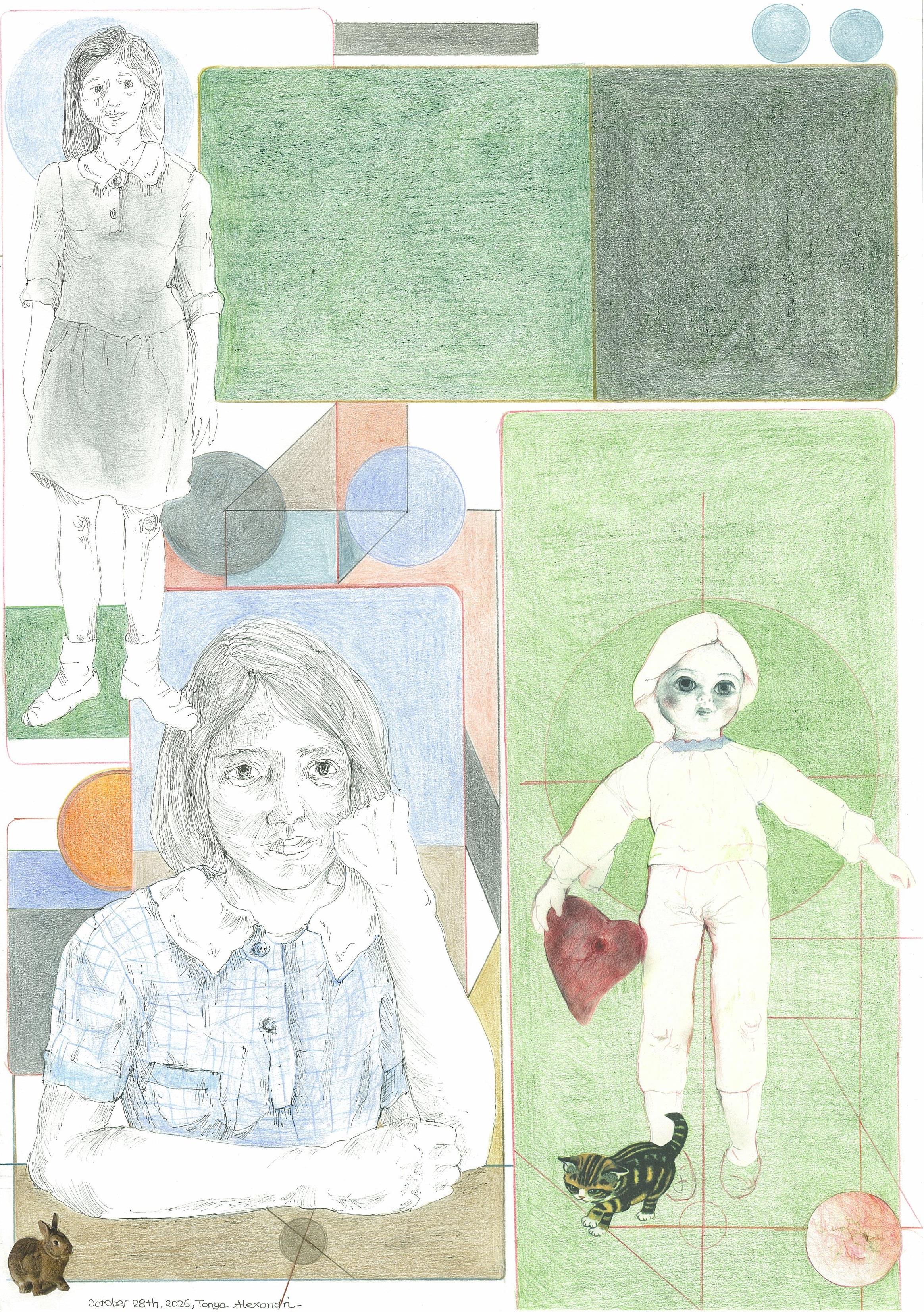 The main characters are the four Flattery sisters, Olwen, Rhona, Maeve and Nell. We get to meet each sibling and observe their individual worlds before we encounter them together under the same roof.
Olwen, the eldest, a geologist professor, teaches about collapsed deep time, the land and its processes, the life it has sustained and the stories it has held over the eons. We first meet her in a classroom, where she and her students are doing an experiment with a squeeze box of layers of different coloured sand that looks a bit like layers of pastry, while a student is screaming in the corridor. Nell, her youngest sister, thinks geology gave Olwen “a way of being in the world, being able to know such a huge story. It’s an unavailable story. To most people. We can read about it, but we can’t look directly at it and read it.” But this depth or breadth of knowledge has also given her a knowing that climate change is a disaster coming. In his 1949 conservation book A Sand County Almanac (Round River) Aldo Leopold writes that “One of the penalties of an ecological education is that one lives alone in a world of wounds. Much of the damage inflicted on land is quite invisible to laymen. An ecologist must either harden his shell and make believe that the consequences of science are none of his business, or he must be the doctor who sees the marks of death in a community that believes itself well and does not want to be told otherwise.” Olwen as the eldest sister she took on the mother role at the age of seventeen after her parents’ simultaneous death under tragic circumstances. She thinks, “For her sisters, she began a bid to fill the gaps. She made her voice boomy. She made her person matronly. She wore her hair such that all caps fit, including a square one… [a PhD cap].” In the evening of the day we first encounter her, Olwen will leave her work and undergraduate students, as well as, her partner and his two young sons, all of whom she has cared for and helped process their grief after the passing away of their mother, to cycle off to Northern Ireland, without telling anyone about her whereabouts. She literally cycles out of the county and out of her life.
Rhona the second oldest, a single mom and a political science professor at Trinity in Dublin, is working in the context of a weakening democracy to change the political system. She is ostensibly successful, more ambitious, excessively busy, well connected, and the most secure financially. We first meet Rhona in her kitchen feeding her toddler Leo and listening to a podcast she had been invited to discuss the use of citizens’ assemblies as a way of increasing popular participation in government. She then pops round to one of her neighbours to discuss seawall defenses and ask him to help her trace Olwen’s whereabouts. She and her neighbours have been lobbying the council and the Office of Public Works to invest in seawall defenses to protect their gardens that have taken a hammering in three extreme tidal events in the past decade, which have led to a depletion of the dunes between their rear gardens and the sea. This scene took me back in time. An old friend had a recurring dream, in which a huge wave would rise above the protective barriers and flood the ground floor of her seafront house, leaving her stranded with her young child on the second floor. Rhona thinks of her house as “a glorious paradigm of a house” and how this one feels like home. She also envisions her sisters being there, opening her cabinetry for whatever they need, turning up at her beach garden door in summer. Even though she sometimes seems cold her maternal love for Leo and her desire to take practical steps to help her sisters prove that her heart’s probably in the right place even if at times she comes across as pushy and even mercenary. She’s the one to step in and act quickly trying to fix things, even things that can’t be fixed easily or quickly. Sometimes it’s a blessing to have a sister [or someone] with resources and connections, and above all good intentions, even if the offerings are not always welcome. Maeve, for instance, doesn’t think Rhona’s suggestion to sue her publisher is wise even if things haven’t worked out, and is suspicious of her sister, who knows a lawyer in every city in the country.
The third sister, Maeve is an Instagram famous chef living in London in a houseboat striving for commercial viability while trying to embody her values through writing and talking about sustainability and future food security. Halim, a friend and mime artist from Bosnia lives on a tent on her houseboat. He is undocumented and is “tiptoeing through this earth, trying to avoid land mines.” He speaks very little, but “tells her vastly more than most people do.” Maeve thinks she may be in love with him. She’s also considering motherhood. She has written a couple of cook books and is making a living through catering dinner parties. We meet her while she’s catering a dinner party in London, we get to see her at work and we get to read what’s running through her mind as she cooks and interacts with the people there. She’s thinking about her sisters, Olwen who’s gone lost, and Nell, whom she loves more than anyone in the world, who has three jobs and who drives between campuses without feeling her feet and has to lecture sitting down. When their parents died Maeve was the one who took care of feeding them and was most likely to excel in a crisis. Once they arrive at Olwen’s “hideout” she slips into this role again, She cooks for everyone, thinks about how to organise the kitchen and make the primitive farmhouse Olwen has retreated to more homely.
Nell, the youngest, has immigrated to America to assert her independence. She’s an adjunct philosophy professor, and she’s been dealing with health issues, she “has slowly lost all sensation in her feet. As she explained to the one GP she could afford to pay out of pocket.” She has no resources or insurance to investigate the chronic numbness of her legs, but her dean and friend tells her that for her to succeed with the tenure track bid, she would “need to show her face at more administration meetings.” Rhona, too, thinks about how Nell is so true to her ideals, that “she has forfeited every capital advance, every political advantage, and nearly all real-world impact by refusing to play the game.” We are introduced to Nell while she’s sleeping. Her sleep is uneasy, and she often dreams of the watery horizon by which her parents died. She likes to go swimming and snorkeling in the early morning hours before work, because swimming is her only means of regaining equilibrium, and because she feels steadier in the water than on land. We learn about how their parents met. Their father, who had travelled the world and owned a wineshop, enrolled in one of her their mother’s classes. She had been teaching evening classes in honors maths, while doing a part-time master’s in applied maths. Nell has recently decided to abstain from romantic relationships, and Maeve thinks that maybe she’s decided to be alone because “it’s easier than admitting to so much baggage,” or because of the fact of one’s mother taking herself out of the equation when you’re eleven is too heavy. Later as Nell is considering her lectures she’s also thinking of Olwen and trying to trace her online. She thinks of how Olwen was generous and pragmatic, a natural stoic, sought no praise and harnessed resilience. She was the mother taken for granted and everyone else needed her and she had always kept her own needs minimal. Nell’s considering a sabbatical to fly back to Ireland to join her sisters to look for her. Her dean, who’s trying to dissuade her, reminds her of Cadmus, who when he went on a quest to find his lost sister, was told by the Delphic oracle that it was useless.
The three younger Flattery sisters and toddler nephew, Leo, descend on the Irish countryside from Ireland, England and America in search of a sister who does not want to be found. They discover her in an isolated farm house going through a mid-life crisis of sorts. They decide to stay even though they’re not particularly welcome and their time together forces them to consider their past, intergenerational patterns, their struggles, their emotions and attachment to each other, their own future, as well as, the future of the planet. Despite their not having all been together for three years they easily slip into old roles, and can anticipate each others’ needs. Rhona wants to fix things, Maeve feeds everyone, and Nell considers whether it’s unwise to hurry Olwen through some process that needs time.Through their interactions and conversations, their shared childhood history, and how this has shaped each one differently, is gradually revealed. During their stay they talk, prepare lectures, go to a pub, do things around the house and take care of Leo. At one point when Nell can’t find an object or toy to give Leo, she talks to him about abstract objects. “You see”, Nell says, “The nice thing about abstract objects—like numbers, Leo, your one-two-threes—is that they’re causally inert. A number can’t be hit by a car, can it? A set can’t feel its square root, or smell poo, or be obliterated by gamma rays or terrorists. That’s why your granny liked numbers so much. Nothing can get at them.” The four women have conversations about daily practical matters, but they also recite Emily Dickinson poems, discuss Heidegger’s concept of care, and the possibility of truly caring like their father, but in a bad or ineffective way, the differences between various ecology groups and theories, food sustainability, citizens’ assemblies, Bertrand Russell, Wittgenstein’s isolation on a west-of-Ireland cottage, and Henry David Thoreau.Their humor, wit and irony, brief critical commentary of philosophers and ideas, academic and intellectual capacities, and political sensitivities are revealed on the pages.
The book actually opens with a geology lecture, in which Olwen tells us that Ireland is a big crash site, born of an underwater collision of two ancient continents. She gives a lecture to her undergraduates on the eons of tectonic convergence it has taken the earth to reach its current form versus the speed at which we are determined to destroy it. She tells them “… ecosystems are dynamic. But nature would have let us have a few millennia yet, if we’d been chill and sound and reasonable. Instead, we’ve been needy, grabby, arsony narcissists.” She takes her students and her partner’s young boys to the Atlantic coast, where she comments “But before ye go thinking the destruction around us is part of a natural process… Oil took millions of years to accrue, till we started boring holes in rocks and throwing in matches. And now, in under two hundred years, we’ve burned up nearly all of it. Europe’s endemic forests took millennia to flourish. In five thousand years, we’ve destroyed ninety-nine percent of them. In Ireland, we went the full hundred….. Processes that should take millions of years are playing out over centuries. Decades.”
Nell is preparing for an online seminar for her students and is briefly explaining Heidegger’s theory of care to her sister Maeve. Basically, according to Heidegger care is not simply a feeling or emotion, but a way of being in the world that involves action and intention. It is an orientation towards the world that is always already present in our existence, and it shapes the way in which we engage with the world around us. He believed that care is what makes us human, we’re borne of care, and it’s our central way of understanding the self. Nell says that Heidegger proposed that “It’s impossible to be in the world, devoid of care. Our being comes about in the womb…. We inhabit the world by caring for it…… Being is caring. Anxiety is a consequence of embodiment, of being, of caring. We are thrown into the world. Thrust into existence, experience—involuntarily, but not indifferently. Indifference is the opposite of being.” He described two types of care: anxious, burdensome care, stemming from fear and the struggle for survival, and solicitude, which is about lifting up others, being attentive, devotional. Nell explains that “With care-as-anxiety, you might just relieve someone’s situational suffering. But with care-as-solicitude, you can enable that person to get out of their situation.” Maeve asks whether we can care badly and Nell points to their current situation stating that they can’t know if Olwen needs saving or supporting, explaining that our capacity to know the world is always going to be greater than our capacity to care for it, no matter how caring a parent or sister or teacher or citizen or activist one is. However, we can improve “the quality of care by orders of magnitude.”
During their time with Olwen, Rhona invites Maeve on a day trip to Northern Ireland, where she’s running a workshop at a university and taking part in a town hall event to discuss participatory democracy and citizens’ assemblies, which involve randomly selected citizens meeting over a couple of weekends to talk about a social issue affecting the country or region, like drug use, transport, biodiversity loss or climate change, or whatever other issue the government is not dealing with. People debate what the issues are and what could be done with experts coming in to do presentations and answer their questions, and then agree on some policy suggestions. Rhona believes that citizens’ assemblies could shift the belief that work is best done by career politicians with vested interests, or by an assembly with no transparency [they’re used in Ireland, Belgium, Paris, Holland, and other European countries]. During their trip she also accepts that she was the sister who “had to sneak ahead, to lay down tracks, since the ones we had led off a cliff. It was lonely. But I did think I’d be loved in the end for it. I had to take the long view.” After the events Rhona’s offered a teaching post, which would require her leaving her current job and Dublin to work in Northern Ireland. It would give her a great sense of integrity, but that would mean leaving everything she’s built, it would mean her son growing up differently. She wonders if there comes a time when even the most promising of people are tempted to lower the stakes of their ambition and stay where they’re comfortable, to protect what they’ve built.
Maeve faces her own dilemmas concerning personal desires, survival choices and values. She’s conflicted about her being part of the problem by working in what are called “dark or ghost kitchens”, where restaurants and online food companies now operate, without any dining area. She sometimes thinks of these spaces as artists’ studios, but she knows that they are all about commerce and efficiency, and feels she’s inevitably part of the problem of the neoliberal infrastructure that’s leading to the disappearance of real restaurants and the loss of permanent jobs. She’s also determined to write a book about cooking and working around food shortages when water requirements will make certain crops unviable, and about how to create a resilient cuisine when the whole food system’s compromised, instead of the anodyne recipe book her publisher wants, which would however, preserve her bank balance, after all she and Nell could make use of the money.
Interestingly, Hughes has chosen three of her characters to be teachers and even Maeve, who’s a chef, assumes an educational role through her books and social media talks. Apart from the fact that teaching is a heavily female dominated profession, it gives the writer the opportunity to focus on the responsibility of the teacher for the welfare, and wise guardianship of students and future generations. Hughes explores the connection between teaching and care. Olwen for instance, is concerned about how much information she can impart to her students when it comes to matters such as the future of the planet and the prospects of our species. In class, while teaching she thinks, “What can she feed them but the truth…..? Isn’t her job to minimize that distance…. to solidify reality, with all its unendurable stresses?” Reality is important, especially, today when a culture of anti intellectualism is promoted and there’s an attack on sciences and humanities. But she also considers “How information is delivered seems to be more consequential than the information itself…..” In an interview Caoilinn Hughes (Denise S. Robbins) notes how as a writer she was also mindful of how readers would encounter her reference to climate and geological changes and Olwen’s crisis, and felt the challenge to be both truthful to the world and her characters, being aware that “reading is a generous act, as it makes the reader vulnerable.” Nell too, is concerned about her students and teaching approach. She wants to teach well, to help the students tap into a different mode of thinking. She’s been trying a more narrative approach with her students, “attempting to engage their imaginations with stories before moving on to the kinds of clarifying arguments that would help them withstand epistemic scrutiny.” She wants to help them get their bearings in the philosophies that they’ll be considering, to see how each new model for a good life relates to those that came before it, and to track how it led to those that follow. We also see other aspects of the teaching profession, like the fact that it’s usually inadequately compensated, and in Nell’s case, there’s no security or health insurance, and not much autonomy about how she caries out her work.
The Alternatives is a bold, complex, layered novel, rich in information and topics, in humor, wit, metaphors and symbolism, and yet it still reads like a novel of characters. It’s about sisterhood, grief, survival and meaningful work, the value of caring and of community, and how to be alive in these times and the paths one can forge, and the impossibility of truly leaving one’s life behind. As one character in the book thinks, when he sees Olwen’s three sisters on her land, “The inevitability of a person’s past locating them no matter how they thwart and buck their life’s course, trying to lose its tail.” It’s a story of displacement from family, home, community, country, and even our sense of belonging and connection to earth, how siblings can bridge conflicting belief systems or fail to do so, and how they can end up fighting very different battles. And it’s also the story of a woman navigating a crisis through giving up a life she’s worked hard for, isolating and returning to nature without a solid plan or significant support. Living off grid is not idealized nor is Olwen certain about he.r decision, and jokes about whether she could survive repairing bicycles after her savings run out. She’s also drinking gin trying to keep thoughts and fear at bay. One wonders whether she will eventually regret giving up everything so abruptly with no prior preparations, and whether her disappearance and isolation will give her the space, timeand freedom to process this midlife breakdown and all that burdens her, not contained, for the first time in her life, by caregiving roles and responsibilities. On the other hand, we can also see that getting away from her work, students and old life, and chosing closeness to nature and building a house, and even the manual work she’s doing, is strengthening and sustaining her, and giving her a sense of freedom, at least for the time being.
Before Olwen’s sisters leave to go back to their lives and jobs Maeve says, “I know we shouldn’t be parting ways. We’re nowhere near ready. There’s too much uncertainty.” They’re also aware that if their sister is going to survive in this remote place for a while, or even more permantly, she will need friends and networks, a community and support. At one point Nell tells her sister that sometimes it’s OK to be a freeloader, for a change, because growing up she never got a minute to coast, to make mistakes, even before their parents died. This becomes more apparent in the end of the book, when Olwen finds herself in a foundation pit buried by crushed stone up to the chest, wondering if this is the end and whether she can last a few days until the cement delivery turns up. Surprisingly, this becomes the catalyst for her realisation of the need to break isolation, and the necessity to reach out for help and support.
The book also touches upon motherhood, working women and how family doesn’t only exist in a domestic realm, the importance of community, the sometimes conflicting responsibilities of caring for one’s self, for loved ones and for the planet, and the conflict between values, desires and survival. Through the perspectives of the four sisters she explores the effects of the tottering neoliberal structure of Ireland, as each sister, in her own way and relying on her field of knowledge [geology, philosophy, politics, food], is seeking solutions and answers to collective problems and questions. Hughes also uses an abundance of metaphors with a variety of interpretations. For instance, she uses geology as a central metaphor and Ireland is described as a land of great collision of ancient continents. Stones and rocks can represent deep time, stability in a rapidly changing world, and the unknowability of people, who unlike rocks, which can be analysed, mapped and understood, are more difficult to decipher, because unlike rocks, you “can’t dig a borewell into them. Find their groundwater.” The strata and layering of rocks could represent the layering and accumulation of trauma, secrets and experiences over time. The sisters’ diverse ideas, theories and perspectives at times, collide and converge like tectonic plates creating friction, pressure, cracks, bearing something new. Stones, rocks and cliffs represent danger and death in this story. In the last scene, similarly to the burden of ecological and personal despair, stones and crushed rock are also weighing down dangerously, threatening to devour Olwen. The four sisters themselves could be considered a metaphor, four aspects of a bigger whole, Nell’s disease, the element of water……
While reading I felt that the story could be adapted into a film, and I also found myself thinking of Little Women (1868) by Louisa May Alcott, also a book about four sisters, and wondering whether it has in some way inspired or influenced Hughes. Both novels deal with the complex dynamics of sisterhood and their deep emotional bond. Both sets of sisters have different personalities, talents and ambitions, and have also experienced loss, grief and challenges, albeit different ones, as the stories are set in different historical eras.The March sisters face poverty, the death of one sister, and the American Civil War era, whereas the Flattery sisters have had to bring themselves up and figure out how to be adults and how to go about being in the world mostly on their own, and are now navigating life in an era of eco anxiety and failing democracies.