Perfectionism and a culture of constant evaluation
“At first glance, perfectionism seems like an individual problem, but really, it’s a social problem…” Dr Ellen Hendriksen
“….It makes total sense that our genetics, the way we were raised, and the larger context of the world around us has shaped us like the tides shape a sandy coastline. In the chapters ahead, we’ll shore up the coastline to withstand the storms that roll through, but mostly, we’ll appreciate the natural beauty of that coastline—maybe in ways we’d never quite noticed before.” Dr Ellen Hendriksen
“Care for the self”……. meant cultivating freedom by refusing to be fully defined by external norms. It meant inventing a style of living that wasn’t just obedience to rules. It meant treating life as art.” (Robert Flix, Foucault in Plain English: Understanding Episteme, Biopolitics, and Ethics of Existence)
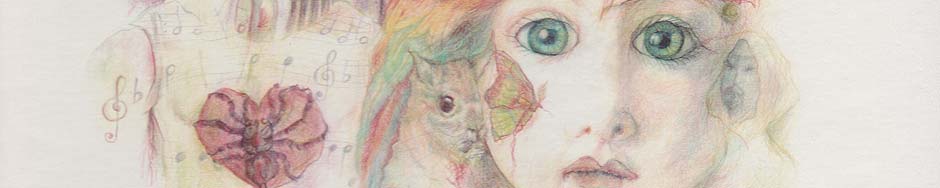
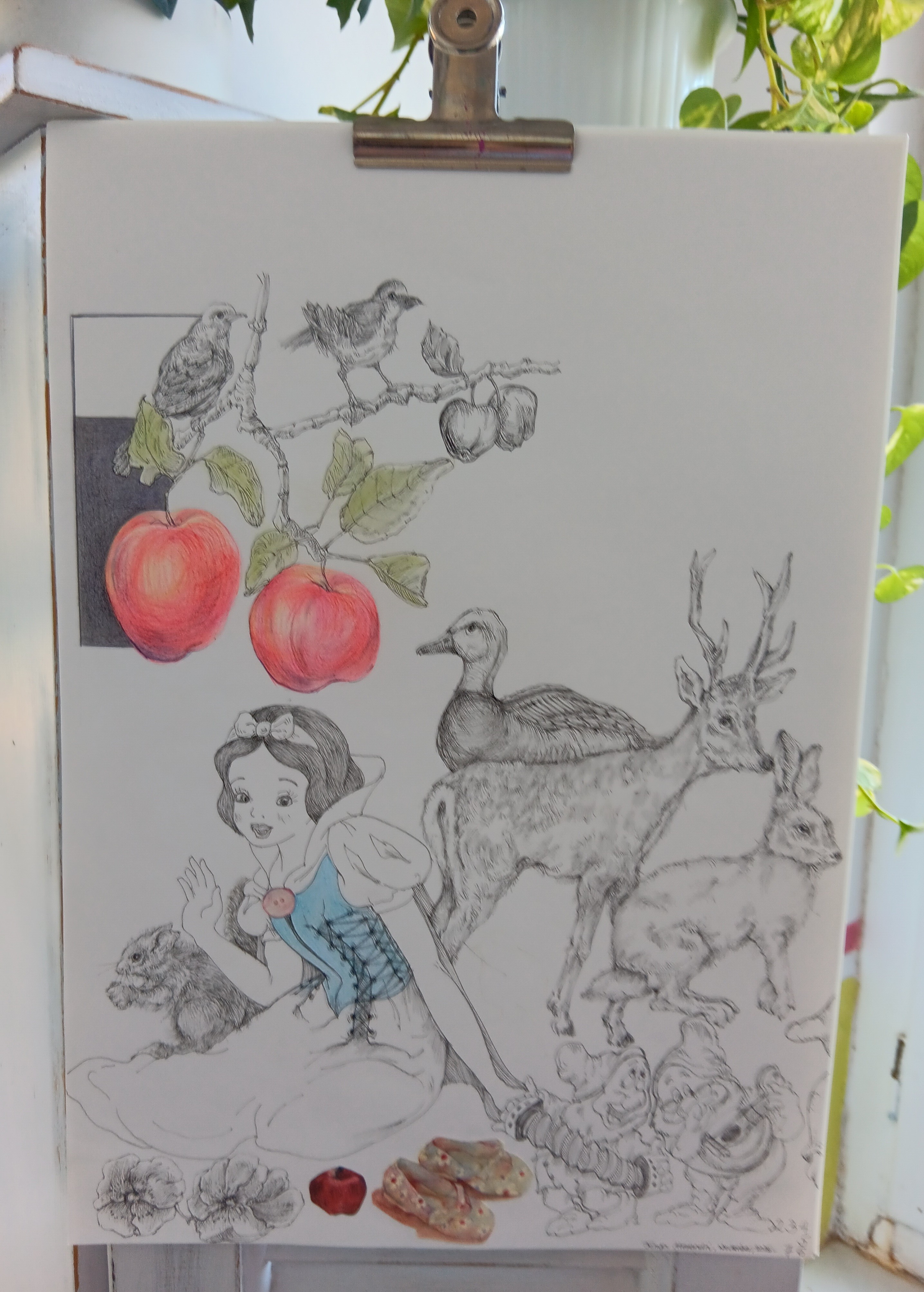
Today’s post is about perfectionism and Dr Ellen Hendriksen’s book, How to Be Enough: Self-Acceptance for Self-Critics and Perfectionists. I’ll also accompany the text with some artwork I’ve been making this month, while reading material on perfectionism, Foucault’s ideas and his concept of the panopticon (I haven’t been able to get the drawings scanned, and so for the time being I’m posting photos of them).


In this book Dr Ellen Hendriksen explores the causes of perfectionism [a multidimensional personality style made up of overlapping traits and habits rather than a single trait], and the fact that it’s the result of the combination of genetics, culture and social circumstances, its various behavioural and psychological manifestations, the advantages and disadvantages of these traits, how they can both hinder and advance our performance and levels of achievement and contentment in life, the price we pay, but also the fact that it’s a valuable asset, its strong connection with conscientiousness, and the fact that there are as many flavours of perfectionism as there are people with perfectionistic traits. She discusses the importance of accepting and embracing our tendencies, and a variety of ways to lower our high standards and decrease some of the things we do that lead to burnout, anxiety, physical illness, and the sense of not being enough that prevents people from participating fully. Furthermore, she provides examples from her own life, and the lives of clients, famous people, as well as, research findings from studies of parents and children, adolescents, college students, athletes, and others.
At the beginning of the book, Hendriksen introduces us first to Walt Disney and then to Mr Rogers (Fred Rogers), to help us distinguish two different flavours of intense perfectionism, one more self destructive than the other, and the importance of clarifying our values and purpose. She begins with Walt Disney’s first full-length animated feature film, Snow White and the Seven Dwarfs, a historic success and the highest-grossing American film ever; which proved a highly excruciating road to success, as Disney had hired “a small army of six hundred artists and drove them into the ground—three eight-hour shifts every day, around the clock—drawing, inking, and painting over a quarter million stills. The work hours totaled two hundred years’ worth of labor, Furthermore, the film, first budgeted at $250,000, had exceeded its budget more than sixfold. His studio owed the bank a million dollars…… during the heart of the Great Depression.” Hendriksen writes that despite Disney’s genius and vision, he was caught in the false choice of perfection or failure, paralyzed by his self-imposed impossible standards and bank-imposed budget. The high pressure and stress led to his withdrawing into himself, often avoiding his problems by procrastinating with his hobby, toy trains.
Fred Rogers was also a perfectionist, but he was more in touch with his values. Hendriksen tells us that his mission on TV was “to make it better, to make it more appropriate and educational for young children.” Rogers had high standards, deep commitment, yet also a clear-eyed vision. His show, Mister Rogers’ Neighborhood, lasted for 895 episodes and each episode, writes Hendriksen, “underwent intense care and deliberation. Excellence was the only acceptable standard.” Like Disney, he too paid attention to the details, saw things and thought of nuances that nobody else did. Once, Rogers stopped production to walk over to the university campus to consult with his mentor, Dr. McFarland, a child psychologist. However, he was more able to combine high standards with flexibility, and conscientiousness and responsibility with creativity, and was less confined by a rigid set of rules. As for perfectionists’ keen powers of observation, which simply means their paying attention to detail, that’s not a problem, what can be problematic are less helpful responses. Hendriksen writes, “What we notice is accurate—the problem is our reaction.” Actually, detail-focused processing is necessary for many kinds of work, consider the role it plays for physicians, artists, architects, editors, and many others. Hendriksen explains that while both Disney and Mr Rogers were characterized by their high standards, intensity, work ethic, focus on details, and a tendency to demand from themselves a level of performance higher than what was perhaps required for the situation; Disney was rigid, whereas Rogers was more flexible. “One avoided any possibility of error; the other made room for inevitable mistakes and hardship through a belief in service and a mission greater than himself. One disengaged from those around him; one engaged fully and with authenticity…… and created a life based not on control but connection.”
Although Hendriksen backs up her points and ideas with a lot of research findings, I will mostly not include references, and focus on the points she makes, as people can always find the referenced writers, psycholgists and research in her book. As I mentioned above, Hendriksen notes that perfectionist traits are not necessarily negative, but can be valuable assets when high standards are combined with flexibility, and only become unhealthy when standards become unrealistic and rigid. Perfectionism comes both from within as a personality style and from around us as a reaction to a demanding environment, and it is on the rise. For instance, studies that examined perfectionism in over forty thousand college students over a generation, from 1989 to 2016, discovered that perfectionism was on a steady upward march. Hendriksen notes that young people have become more demanding of themselves, more demanding of others, and perceive that others are more demanding of them, and that one in three children and teens today deal with some “clearly maladaptive” form of perfectionism, where “they grind themselves into the ground like a cigarette butt under a stiletto trying to meet their own standards.”
Hendriksen tells us that actually “perfectionist” is a misnomer because it’s not really about striving to be perfect, but more about never feeling good enough, so we become our own toughest critics, and despite our “eagle-eyed inner quality control inspector” ensuring we do things correctly; we still worry about letting others down, making mistakes, being judged or criticized. We also receive different dubious labels: “type A, intense, task-oriented, driven, workaholic, neat freak,” and so on, but she reminds us that perfectionism can confer some superpowers like high standards, strong work ethic, conscientiousness, reliability, and deep care of others. The word dates from the 1600s and distills down to conscience, our inner sense of right and wrong, and it means caring deeply about others, caring about doing things well, caring about doing a good job, caring about being a good person. She believes that often at the heart of perfectionism is conscientiousness, the most potent trait for a good life, and that “When we peel away perfectionism to reveal the heart of conscientiousness underneath, our lives not only get better, happier, and more satisfying, they may even (as research has showed) get longer.” However, at some point, conscientiousness can tip over into unhelpful perfectionism, and like too much of anything it can go awry, and subject us to a riptide of I should do more, do better, pushing ourselves despite adverse consequences, “hammering away at the nail long after we’ve smashed our thumb.”Therefore, she adds, “we’ll harness our dream team of traits: conscientiousness, grit, commitment to excellence. We’ll keep our strong work ethic and attention to detail……,” but “we’ll also gain some new powers: rest without guilt, enjoyment without a goal, flexibility without anxiety, success (and failure) without overevaluation, forgiveness for mistakes (both others’ and our own), and a kinder, gentler regard for ourselves. We’ll grant ourselves some kindness instead of the inner nun with a ruler, some grace instead of the internal cattle prod.”
As I mentioned above, perfectionism is on the rise and there are a hundred different ways of being perfectionistic because people are complex and different, and also, human psychology and behaviour are the result of multiple complex intertwining factors. Also, we’re not perfectionistic about everything all the time; we’re only perfectionistic about what interests or matters to us, and for some people perfectionism mellows as they age, as they ease up on themselves and care less about what others think, as they fully realise, as Hendriksen puts it, that judgment is the tax for doing anything in the world. It is suggested that there are certain common tendencies that go along with perfectionism, but not everyone will see themselves in all these domains, as we said, there are many flavours. These tendencies involve having a hypercritical relationship with oneself, overevaluation (evaluating our self-worth according to our performance) and overidentifying with our performance, orienting to rules and shoulds, zeroing in on perceived duties and responsibilities, focusing on mistakes, procrastinating, comparing ourselves to others. Hendriksen says some will orient to detail, others will try to do things all by themselves (perfectionists are not good at asking for help, accepting favours, or delegating), others will work hard to put on a good face; saying everything’s fine. Our drive to do things right also extends to our emotions, we tend to over regulate our emotions, feeling mortifyied to lose control, putting on a brave front, telling others we feel fine when we’re not, feeling guilty about our weakness since other people may have it worse than we do. She writes, “Those of us with perfectionism have self-control that’s gotten a little out of control.” Unhelpful versions of perfectionism can show up as a hypercritical relationship with oneself, focusing on flaws or failures rather than achievements and what’s going well, what is lacking rather than what’s good.
Perfectionism can manifest as overidentification with meeting personal demanding standards, which Shafran and colleagues call overevalution, which means that our evaluation of ourselves as a person is contingent upon our performance and achievements, conflating meeting our expectations (or failing to do so) with our sense of self. Don Hamachek referred to this as an “over-value [of] performance and under-value [of] the self.” We can overevaluate almost anything. Hendriksen writes that people can define themselves and measure their self-worth by their grades, achievements, athletic prowess, body weight, shape or colour, appearance, number of social media followers, healthy eating or gym performance, tidiness of their house, work and productivity, social or financial status, and on and on, whatever matters to each one. She clarifies that there is no moral judgment on any of the traits and habits of perfectionism, and that nearly all the tendencies discussed in her book are useful and rewarding ways to operate in the world. In relation to her clients, for instance, she writes that “all her clients who struggle under the weight of perfectionism are beautiful humans who work hard, care deeply, and do right by others. But they can’t see how capable and delightful they are. Perfectionism—the measuring stick they use for themselves—pokes holes in their sense of self.” It’s only when our habits become rigid, our expectations unrealistic and our sense of worth dependent on achievements that these traits become a problem.
Hendriksen says “those of us familiar with perfectionism are in a very big boat. Actually, there are three boats: self-oriented perfectionism, other-oriented perfectionism, and socially prescribed perfectionism. Socially prescribed perfectionism is the sense that others will come down harshly if we fail to live up to their expectations for us. If the self-oriented kind comes from within, this type comes from all around us, “from the minestrone soup of culture we all float in: capitalism, oppression in all its forms, consumerism. This is the most toxic breed of perfectionism. It’s also the one that’s increasing—no exaggeration here—exponentially.” Other-oriented perfectionism is when people are harsh on the people around them and have higher-than- necessary expectations. One example in the book of a well known person is Steve Jobs. Hendriksen refers to extracts from Lisa Brennan-Jobs’ book, where Jobs recounts her father’s evisceration of his young niece, Sarah, for failing to live up to his unspoken expectations, criticizing her voice, the way she speaks, walks and eats, leaving her sobbing into her half-eaten burger in public, or his screaming at subordinates, sending his food back three times in a restaurant, etc. This, Hendriksen writes, is the only form of perfectionism that isn’t rooted in conscientiousness, and is referred to as a “dark” form of perfectionism because it’s centered on “high self-regard but low regard for others,” combined with unhealthy narcissism. She clarifies that narcissism, a word that’s everywhere nowadays, exists on a continuum. What we call healthy narcissism drives self-preservation, entitlement to justice and human rights, protection of one’s family and property, as well as self-acceptance, self-worth, and enjoyment, whereas on the unhealthy end of the continuum are “domineering, demeaning, grandiose yet fragile, quick to gleefully exploit you if it serves their self-interests” people, and there’s “a whole lot of variation in the middle.”
We mentioned above that perfectionistic traits are the result of the combination of culture, social circumstances, personal experience and genetics. For instance, studies have shown that genetically girls’ tendency to exhibit perfectionisitc traits is higher than boys,’ both in childhood and adolescence, but of course one’s genetic profile is influenced by their early environment and society in large. Hendriksen writes “Our genes and family environment are just two slices of the perfectionism pizza. The forces of culture play a big role as well. Culture is like an invisible, odorless gas.” One factor is the family we grow up in. In the book Hendriksen discusses four basic types of families: the anxious rearing model, which tracks firmly with overprotective, helicopter parents and snowplow parents that try to remove all obstacles from their children’s path. In the social expectations model, children earn adults’ time, attention, compliments, or pride because of the performances they deliver, and even the title of “creative” in the young mind becomes an obligation. Here“the heart of the family dynamic is contingent approval.” She writes the lock-and-key analogy of family culture and child personality is particularly salient for kids to whom accomplishment comes easily because when the child is bright or talented or precocious, they are rewarded with time, attention or love, but “love is a freely given emotion,” not based on achievement or performance. This kind of environment can be more intense when “…families believe it takes intense pressure to create a diamond. In the the social reaction model Hendriksen says, children of abusive, dramatic, erratic, or chaotic family environments try to gain safety and control. They might become fiercely independent and self-reliant to cope with less than good enough parental care, addiction, serious health problems, custody battles, or poverty. Children often resort to behaviours and coping mechanisms that give them some sense of control (e.g. obedience and pleasing others, over or under eating, perfectionism, striving for high grades, denial and dissociation, assuming a caretaker role, etc.) Some coping responses are more helpful for the child in the long run, but they all serve a purpose initially. Finally, in the social learning model, “perfectionism is infused in the air we breathe.” Here “perfectionism is like the weather: always present, always driving our choices.” In these families talking about feelings is not encouraged and the expectation is to be strong like a rock. However, a study in Australia, where children were asked to copy geometrical shapes, showed that perfectionistic coaching by their mothers skyrocketed perfectionistic behaviors in all kids, with or without clinical anxiety. Whereas, giving kids permission to make mistakes not only reduced anxiety, but also reduced the number of mistakes they made while drawing their geometrical shapes. Although this categorization of families is very helpful, it’s important to bear in mind that family structures and parenting styles have changed significantly over more recent years, and mostly that families come in many flavours and combinations of the types mentioned above, as well as the fact that family dynamics and ways of being can shift and change.
Additionally, Hendriksen says, negating our accomplishments and downplaying healthy pride feels virtuous for those of us raised to be humble, and we are mortified at the thought of ending up an entitled narcissist, but we’ve confused modesty with mistreating ourselves. Bullying, inside and outside the family, which involves fear and shame, also skewers our self-worth, she writes,“with surgical precision because we are told to our face that we are substandard, plus we are socially rejected for it. It’s exactly the opposite of the social safety our brains are looking for.” Being devalued by someone else, criticized, judged or excluded, impacts us and perfectionism can serve as a buffer to threat. She refers to Fred Rogers and how being bullied and being called Fat Freddie, as a child, left its impact, but also made him the man he became. Of course families do not exist in a void, but in the context of the larger world. When families are put in a society infused with injustices and many –isms and prejudices, “the pull to prove themselves is no longer a personality trait but the result of socially prescribed perfectionism—an understandable reaction to an environment that sends the message: you don’t deserve to be here. People feel the pressure to be perfect or get everything right to prove they deserve to be here, to disprove stereotypes or others’ opinions of them or their group, and often they’re required to put twice the effort, and they believe the problem lies within them, not the fact that our society disguises oppression or systemic inequality as individual pathology (Hendriksen).” Concerning the young there’s reference to a study, for instance, where they found that racial discrimination in seventh grade was associated with socially prescribed perfectionism in eighth grade, which in turn was linked with symptoms of depression in ninth grade. Another study tracked suicides in the state of Alaska from 2003 to 2006, where the researchers interviewed grieving parents who had lost teens and young adults, and found that 62 percent of the bereaved parents described their children as struggling with being perfect.
In the book there is reference to five elements of our culture that have made us a culture of constant evaluation. The first element is quantitative measurement and comparison. Hendriksen refers to Dr. Hill who says that “Young people are sifted and sorted more than they’ve ever been sifted and sorted before.… They’re the most assessed generation of young people.” The second and third elements are social media and the “live your best life” mindset that highlights the gap between how we are and how we expect ourselves to be. The fourth element, she writes, is the one negative side effect of the happiness movement, which she calls “Don’t Worry, Be Happy.” She does highlight the significance of Martin Seligman’s work and the turning away from the profession’s emphasis on pathology toward positive psychology, which was missing from the field. The result of this movement, she says, is a growing mountain of research on the good life: hope, wisdom, creativity, courage, grit, resilience, and, happiness; however, she notes, “the tidal wave of happiness how-to books and articles that followed have set the expectation that we should be grinning from ear to ear, mindful, anxiety-free, and confident all our waking hours…” and that feeling grief, sad, awkward, bored, uncertain or insecure is a sign that something is “Very Wrong,” and it’s this intolerance that’s very problematic.
The book includes several interventions, exercises, and questions to ponder on, increase awareness of and work with perfectionistic tendencies that are causing problems or leading to anxiety, exhaustion and burn out, taking a toll on our health and well being, isolating or blocking participation and leading to the margins of life. However, it’s not a trait that we want to get rid, says Hendriksen, because “who doesn’t want to be capable, reliable, and get stuff done?” Mostly we want to regulate our tendencies, take better care of ourselves, and use it for our own advantage and the good of others. She adds “We’re not going to abandon the hard work and high standards that make you you, but we will make more room for rest, joy, community, and connection.” She tells us that we will still be perfectionisitc, but the aim is for it to work for us, not against us, and this is called adaptive perfectionism, “perfectionism that buys you more than it costs you.” Hendriksen also situates herself in the narrative, telling us that demanding a lot of ourselves has probably gotten us a long way like it has got her, but unchecked it has also come with some cost, because perfectionism can take us down “the road of Walt Disney—isolation, burnout, chronic dissatisfaction,’’ and it can also go “the way of Fred Rogers—excellence, flexibility, magnanimity.” Most importantly, she notes, once we are aware of our tendencies we can forge the path we take. For her perfectionism is mostly related to her work and social behaviour. She writes, “I am detail-oriented. My approach to work, for years, was to overload myself, I kept putting more on my plate. I soldiered on solo.” But this, she says is not sustainable in the long run and the costs for her was getting diagnosed with a health problem, waking up one morning unable to turn her neck to the right, overuse injury from too much typing, and burn out.
She describes her own process and the steps she took, and suggests reaching out for help, instead of trying to do everything by ourself, being flexible when it comes to rules and shoulds, being real and showing more of the messiness of life and our process to the world instead of the accomplished outcomes, not doing all the caretaking and learning to rest and take breaks, doing more things for enjoyment. Relaxing our focus on mistakes is also important, accepting that mistakes “are part of the package deal of being alive,” and letting go of the idea that we can always make regret-free decisions. Mistakes, regrets, unfair judgment from others are all part of living and having human relationships, but what we can always do is focus on and affirm what’s important to us in each moment. She also argues that most perfectionists do not need a self-improvement programme, rather little tweaks because, as far as a personality style goes, they have some great traits. They’re conscientious, hard working and caring. Sometimes all that is needed is awareness, and an updated mindset of willingness and flexibility, “to take a breath, take a look around, and know, deep in your bones: I am worthy just as I am. I am enough.” This of course might not be as easy as it sounds because perfectionism becomes second nature and can be the result of learning, some of it traumatic, fear of punishment or rejection, and it’s the place from which we automatically function often unconsciously. Therefore, psychoeducation and mindfulness can assist us in detecting when we’re doing more than necessary, in learning to regulate tendencies, and ultimately in protecting ourselves.
Hendriksen suggests shifting our attention spotlight from the global self to the specific behaviour, in other words shifting our attention to the thing we’re doing, not the self, and of course, being kind to ourselves, being mindful of our feelings and experience, and “recognizing that personal inadequacy is part of the human condition, and therefore connects us to every other person on the planet.” She writes that an avalanche of research tells us that self-compassion is effective and good for us, and for people who find it difficult, self-compassion can be actions like giving ourself permission to be unproductive and to not please and make everyone happy, because it only works for the people being pleased, permission to not do things, permission to not meet others’ or our own unrealistic expectations, permission to rest, slow down, and take care of ourself. “Care for the self” could also include cultivating freedom by refusing to be fully defined by external norms, inventing a style of living that isn’t just obedience to rules, and treating life as art.” (Robert Flix, Foucault in Plain English: Understanding Episteme, Biopolitics, and Ethics of Existence)
Many of us have underdeveloped “want” muscles because we have learned to put our wants and needs on the back burner, which may be convenient for others but bring loss and grief to us. Hendriksen suggests shifting our attitude and behaviours, and reflecting on what always pleasing and agreeing with others is costing us, and then identifying instances and opportunities to act differently, while bearing in mind that when we decide to change and when we push against a system, the system will push back. She refers to Turrell who says that conditional acceptance is no acceptance at all and the end of relationships built on people-pleasing may not be the wrong result. When we need to twist ourselves into a pretzel to earn our way into the tribe, when we are required to silence ourself, be quiet, good, obedient or perfect, then that’s not true belonging. Hendriksen tells us that in his book for perfectionistic high achievers, Thomas DeLong, claims that high-achieving people often experience a “gravitational pull to feel left out,” a sense that they don’t belong, even in groups they’re already part of. Relevant questions we can ask ourselves are: If you didn’t have to prove you belong or if you felt accepted, what would you be doing? What would you do more or less of? How would you participate and connect?
Another important step is shifting form labels to values, reflecting on how all sorts of labels, even positive ones like kind, generous, creative, capable, and so on, may be determining our behaviour. Especially in young people, who are trying to define who they are, labels can create, Hendriksen writes, “strictures and rules that define them from the outside in.” How we understand our self can be shaped more by discourse and cultural mandates rather than the result of a process of self understanding and choice. Hendriksen considers the widespread use of mental health labels, nowadays, and how they can reinforce behaviours, responses, and decisions. Labeling is a form of categorization, and it’s not always about healing, but more about silencing, controlling, and shaping people into categories society finds manageable (Robert Flix, Foucault in Plain English: Understanding Episteme, Biopolitics, and Ethics of Existence). Also, our labels are what’s called ego-syntonic, meaning they help us be consistent with our idea of ourselves, which can be a good thing, but consistency can also backfire because it can stifle growth and change, because labels also tell us what not to do or try, what ambitions to let go of, and even, how much and what we can desire. Labels can serve as fences. Hendriksen claims that “when we try to make our lives consistent with our labels, but our labels tell us what we can’t do, what we can’t handle, what we have to do, or have to be like, then they’ve boxed us in.” However, shifting from our over-identified labels to values can make a difference. Values guide how we want to live our lives, they reflect what we find interesting, meaningful and important in life, which “can be anything: honesty, connecting with your kids, comedy, tradition, hard work, social justice, creating art, being a loving partner, books, generosity, self-care, or any of a million other things.” Most importantly, values aren’t and shouldn’t be coercive or obligatory. They’re also different from goals and rules, can change as we get older or gain more experience and knowledge.
Black and white thinking is also not very helpful, and Hendriksen suggests shifting from an All-or-Nothing Performance attitude into more realistic thinking like: I’m a hard worker who also procrastinates at times or I’m a kind person who can also advocate for myself or I’ve arrived and am still seeking. Similalry, shifting from rigid rules to flexibility can make a great difference. When particular standards and rigid rules become internalised they turn the self into “an internal guard” that controls oneself without the need of external reinforcement. Hendriksen writes, “We each have an Inner Rulebook deep inside our brains. It’s not standardized—in fact, it’s custom-made for each of us by important adults in our childhoods, our life experiences, and the cultural amniotic fluid we float in throughout our lifetimes. It’s important to have some rules…” So yes, Be kind. Don’t do to others what you would not like done to you. Don’t be racist, Don’t be cruel to cats, Drive carefully, and so on…. Following these rules, she says, buys us clarity, simplicity, a reassuring sense of control, achievements, admiration or reduction in criticism, a sense of certainty, and a knowing of how to behave in situations, so there’s no need to throw them all out or “abandon all our responsibilities, and go feral,” but any rule can usually backfire if there’s “no margin for error and no room to breathe,” no room for re-processing and re-evaluation as we get older and as contexts change, or if it’s arbitrary, overidentified with our character or rigid, even though at times rigid rules also have their place. For instance, she notes, “surgeons should break sterile field 0 percent of the time. Pilots should be sober on 100 percent,” when flying. Finally, questioning rules isn’t about lowering our standards or betraying our values, questioning our habits and the rules we adhere to allows room for clarity and choice. Particularly in “an age of big data, surveillance capitalism, identity politics, health crises, and algorithmic nudging” questioning may be more important than ever (Robert. Flix, Foucault in Plain English: Understanding Episteme, Biopolitics, and Ethics of Existence).
Perfectionsim can also take the form of overcompensation, which is basically doing beyond what needs to be done, giving more that needs to be given, which ultimately costs us more than it buys us. Alfred Adler regarded perfectionism as a form of overcompensation.We can overcompensate in relationships, in parenting, at work, at school. Hendriksen’s own overcompensation has been hyper-independence as a way to avoid being a burden. Another example is holding students of colour, immigrants or poorer students to higher standards of behaviour and achievement than more privileged peers. Some questions to ask ourselves if we tend to overcompensate are: Under what circumstances do you over perform to feel safe or to avoid getting it wrong? What would you do differently and what would stay the same? Self-enquiry can help us gain awareness of what we need to keep, regulate or let go of completely. The book includes many questions one can work with like: What self-judgments does your brain regularly dispense? Consider how these might be a natural by-product of genetics, upbringing, life experiences and sociocultural context? It also includes writing practices (creating a self-criticism story), exercises of variations of cognitive defusion, like for instance, picturing negative self evaluation or relentless standards in our mind, turning them into animation, playing with the sounds of the words: singing them, using colours, and so on. Also, it might be worth mentioning that we’re not perfectionistic about everything all the time; we’re only perfectionistic about what interests or matters to us, and perfectionist traits can mellow as people age, as they ease up on themselves and care less about what others think, being more aware as time goes by of the fact, as Hendriksen puts it, that judgment is the tax for doing anything in this world.
Procrastination is also a topic explored to some depth in the book because it often accompanies perfectionisitc tendencies. Hendriksen refers to an unusal study in the 1990s, the creative brainchild of a grad student, Dianne Tice and Drs. Ellen Bratslavsky and Roy Baumeister, where participation was mandatory for psychology students. In brief, one group of participants was initially asked to read a feel-bad dead child story, while the second group read a story in which they heroically saved a child’s life. They were then asked to write an essay about their emotions, which naturally amplified their emotional experience, and after that the researcher put an aromatherapy candle on a table, lit it and told the first group that “This candle has been shown to freeze your mood.” The second group was told that emotions naturally change with time. Then she told everyone them that she would return in fifteen minutes, during which they could do as they pleased, with a challenging multiplication test that was designed to reflect their analytical abilities and reasoning skills. Meanwhile, the first group got some old psychology journals and pre-school puzzles, while the others were offered a video game, popular magazines, and an age-appropriate puzzle. This study showed that although procrastination has usually been linked to poor time management, it has more to do with emotion management. When we procrastinate instead of regulating our mood and dealing with our fear of failure, conscious or unconscious, we actually outsource our mood management to an external source, whatever that external distraction may be, TikTok, watching TV, social media, eating or cleaning, whereas, what is required is mood repair, which is not always easy. Hendriksen’s advice is to get started and the mood will catch up, because usually once we’ve started an activity we might be stressing over or delaying, it’s easier to feel engaged with it, and likely our mood will shift, too.
There’s also a chapter on social comparison, where Hendriksen writes, that at its heart it’s a lack of information, and in order, to limit its negative effects we should get more information and broaden our comparison points, both in quantity and variety, and when we do this the comparison usually falls apart, and “we see that the picture is complex and comparison, thankfully, is futile.” She also discusses many more topics and concepts like emotional perfectionism, how Western society holds up the extrovert ideal version of fun; whereas, it’s totally okay to be wired differently and to enjoy other things, and also how the opposite of (emotional) control is not being out of control, but trust, not trust that “no one is judging us or that we’ll feel amazing if we just let loose a little—that’s naive and misleading,” but trust that we can handle whatever happens, both internally and externally. She also claims that humans’ impressions of each other fall along two fundamental dimensions—competence and warmth; however, our genetics, upbringing, and culture put us in a double bind, and even though we’re reinforced to focus on competence through individual achievement, warmth is still important to connect with others, as well as, sharing ourselves because in order to be known, we have to reveal ourselves. There are different levels of being known, as there are different levels of disclosure and vulnerability depending on the context, the relationship and our levels of trust. Also, when we’re in self-protection mode, we’re more in an anti-relationship mode.She goes on to describe perfectionistic self-presentation, meaning the “I’m nice face,” or the “I’m Strong Face,” which both describe mostly what we don’t see. She quotes Dr. Marisa Franco, who writes, that “being more real, paradoxically, is easier. It doesn’t take as much energy to be genuine as it does to monitor ourselves and overregulate,” which doesn’t mean we should be genuine or unfiltered all the time or that we should let our raw, unedited words and emotions hang out, but to be authentic with regard to the situation and how socially safe we feel. Hendriksen also talks about conversational “doorknobs,” to help us engage in conversation, and much more, since the book is full of concepts, references to research findings, stories and exercises.
Finally, the intersection of perfectionism and necropolitics explores how strict and rigid ideals of how humans should be and optimization of the self are used to pigeonhole individuals or groups of people and decide whose lives are worth; who is deserving of life and opportunities to succeed and thrive, and whose lives are indisposable. Peferctionist standards lead to demands for optimization of self, constant productivity and self reliance, especially, during times when cuts occur in public heathcare, education, and other areas.When socioeconomic and political systems enforce perfectionist standards, hierarchies of worth are created and anyone who is perceived as not meeting these standards can be categorized as defective, unproductive, and expandable. Categorizing and defining perfect and /or fully abled bodies and minds creates hierarchies of human worth that can lead to prejudices and ableism, racism and eugenics. Demand for perfection masks systemic violence and interferes with people’s rights to be, to work and earn money, to social services, and to be safety. We have often seen this play out in history, but also today policies that are rooted in cognitive and physical perfectionism can justify denial of care, marginalization, institutionalization and disposability of people with disabilities, health issues or people who are considered neurodivergent. Also, as mentioned above, socially reinforced perfectionism and particular standards, and expectations and rules, become internalised turning the self into “an internal guard” that controls the self without the need of external reinforcement.