Some artwork and a film
“Never try to convey your idea to the audience – it is a thankless and senseless task. Show them life, and they’ll find within themselves the means to assess and appreciate it.” Andrei Tarkovsky
“When I speak of poetry I am not thinking of it as a genre. Poetry is an awareness of the world, a particular way of relating to reality. So poetry becomes a philosophy to guide a man throughout his life.” Andrei Tarkovsky
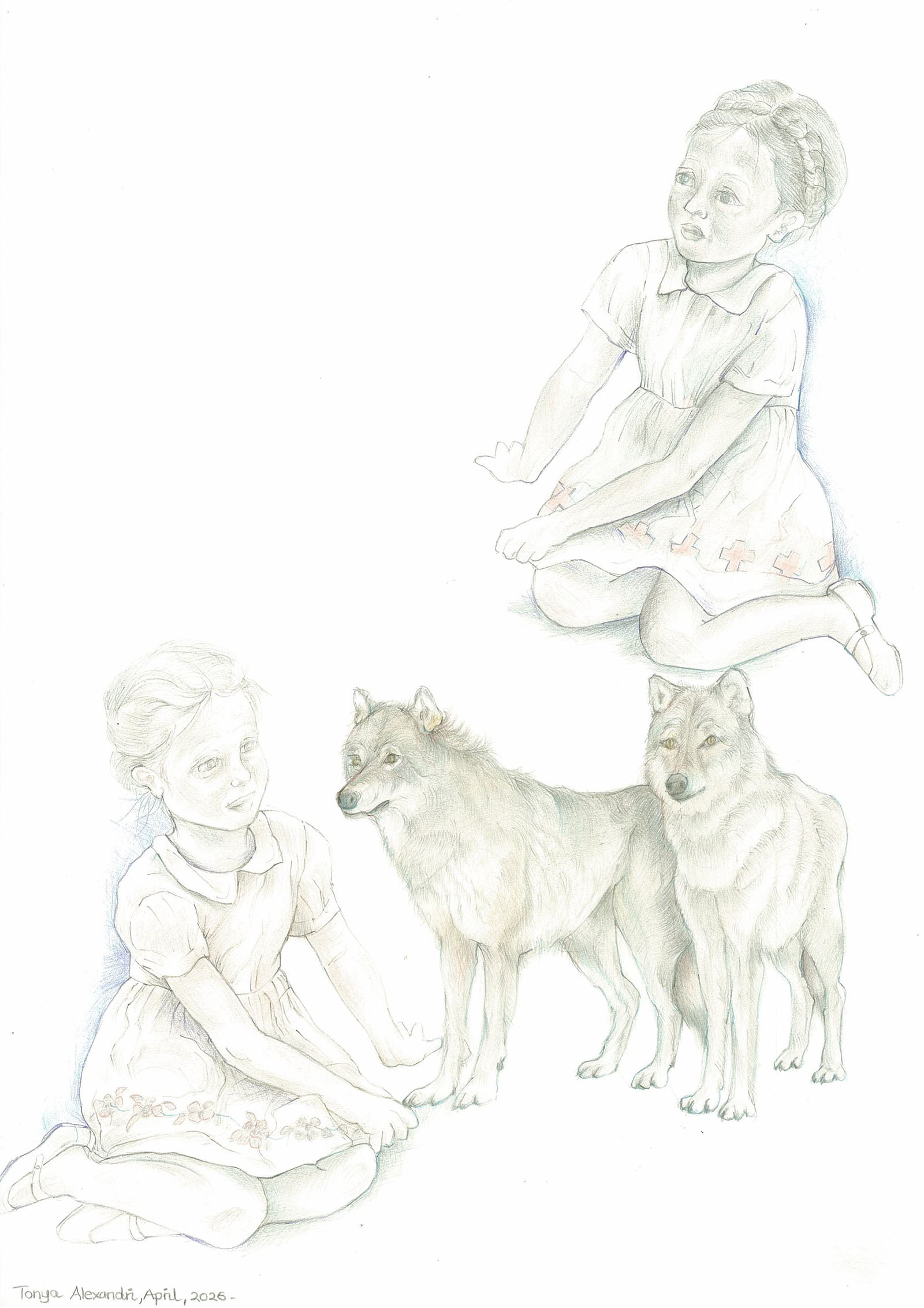
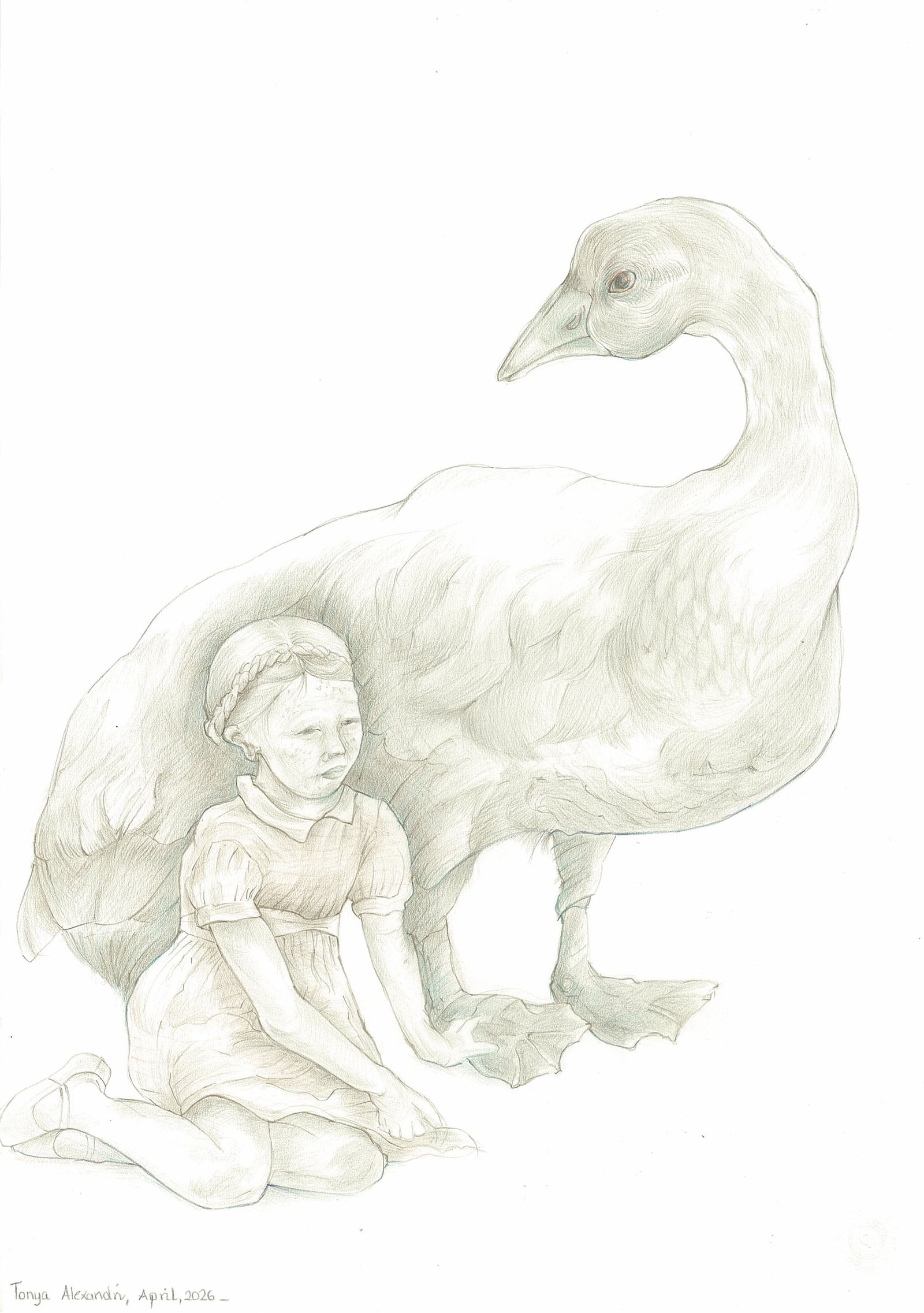
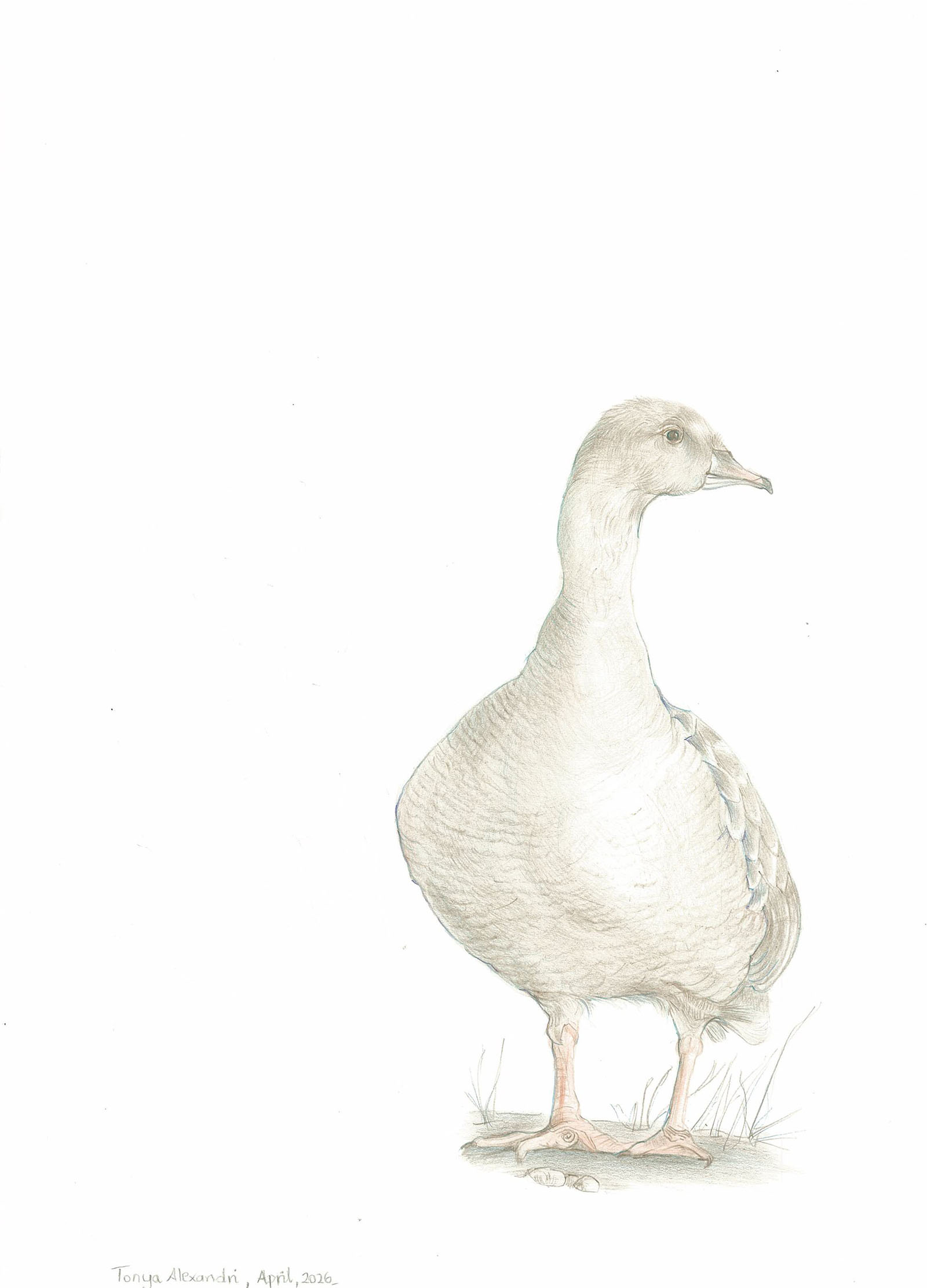
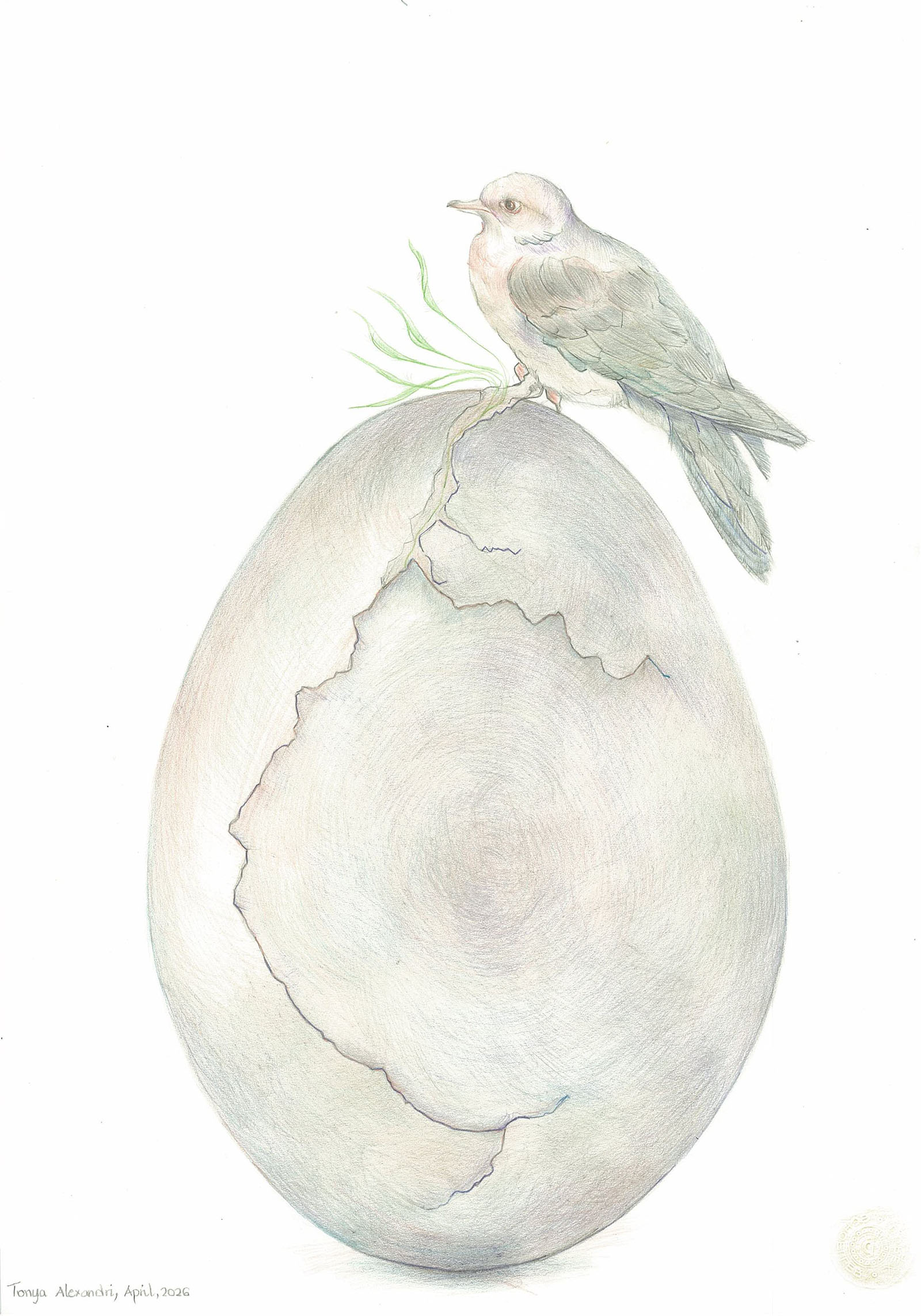
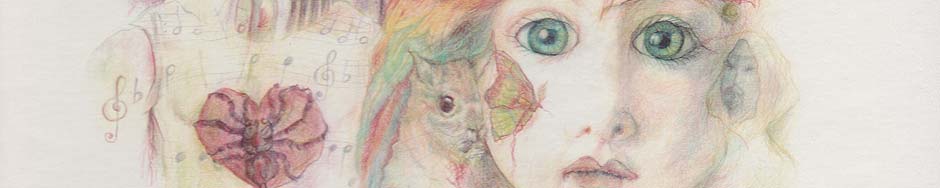
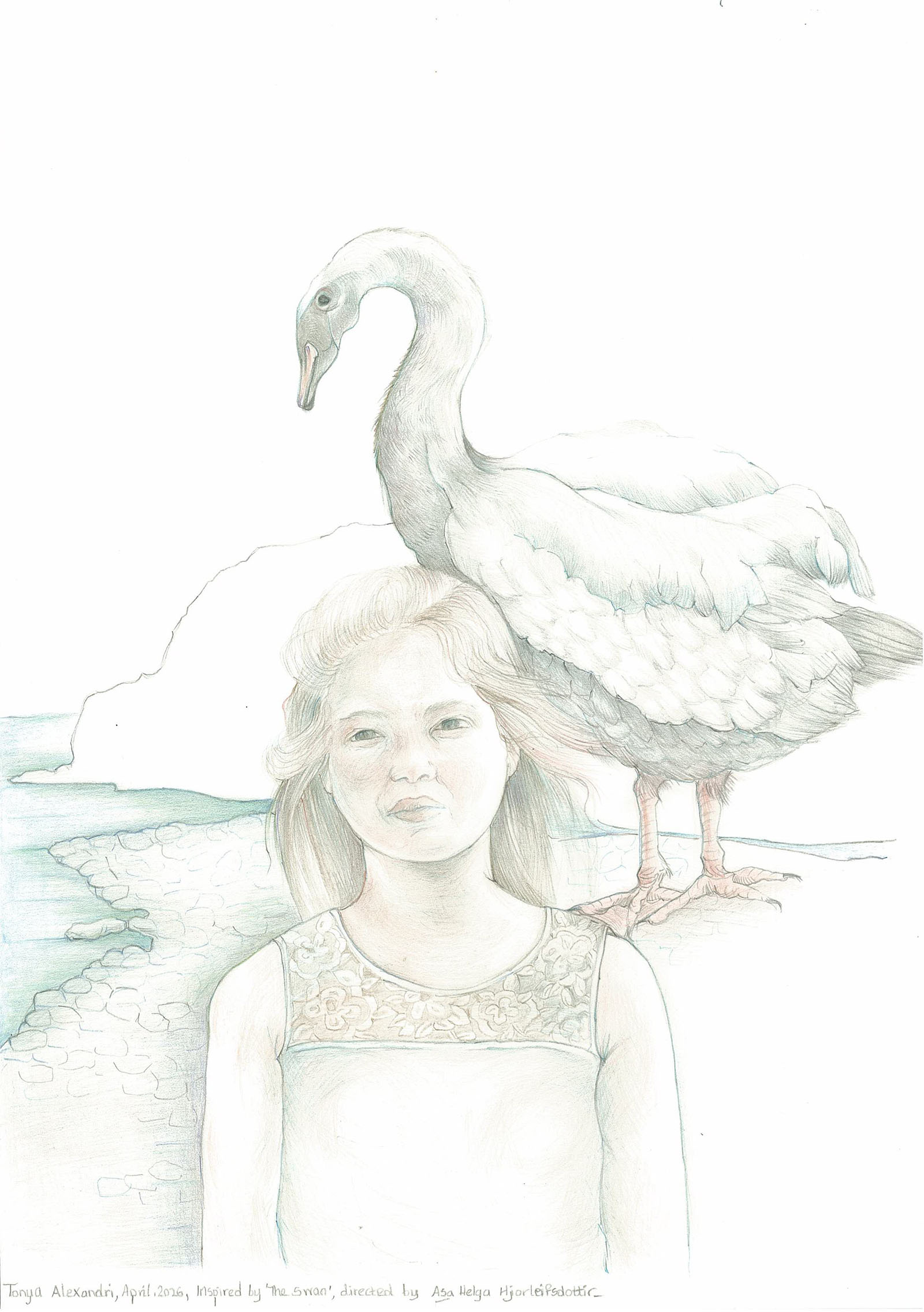
Today’s post includes five pencil drawings I’ve made this April, one of which is inspired by a film I watched recently, The Swan (2017) directed by Asa Helga Hjorleifsdottir, a story of coming of age and discovery of self on a remote farm in Iceland, based on a novel by Gudbergur Bergsson. The film tracks the story of a nine year old girl, Sol, who we understand has stolen something insignificant. Before she’s sent away to stay on a remote farm for the summer with her great-aunt and uncle, her mother says to her: “You were so good when you were little,” and Sol replies, “I’m still good….. Sometimes…”
The practice of sending children to work on farms during the summer to instill independence and and to foster maturity is waning, but used to be more popular in the past. I will quote an article concerning this practice as a social intervention in the 20th century that I found online at: https://www.tandfonline.com/doi/full/10.1080/2156857X.2025.2480137#abstract. “In 20th-century Iceland, the practice of urban children spending summers on farms evolved from a cultural tradition to include formal social service intervention for vulnerable youth by the early 1970s. …. Social workers viewed farm stays as opportunities for children to broaden their horizons through farm life participation, nature immersion, and animal interaction. Adults who experienced farm placements in childhood valued the structured routine, outdoor activities, and animal care, though their experiences were not uniformly positive…….Thus, the gradual decline in farm placements reflects both changing professional perspectives and practical challenges in its implementation.”
The purpose of staying on the farm, away from everything she knows is to teach Sol some lessons about life and help her mature through routine, work and contact with nature. Her new environment is very different from anything she has known so far, and, at some level, it’s a harsh world that she will have to, more or less, navigate on her own. Sol’s homesickness and loneliness are pulpable. She has to make considerable adjustments, as she doesn’t know anyone, her mobile phone is taken away, there’s no internet, no opportunity for play, she’s forced to share a room with the young farmhand, and the adults are minimally nurturing.
She begins work the first morning after her arrival. Soon she’s asked to help with the birth of a calf, which initially frightens her, but she bonds with the young animal and seeks its companionship when she feels lonely or frustrated. And then she witnesses the calf’s slaughter, and worst of all, it being served for dinner. This is only one example of several “loss of innocence,” and one could say impactful or traumatic symbolic events in the film. Meanwhile, Sol is forced to share a room with a young man, Jon, who has been helping on the farm for many summers, working in the day and writing a book at night. This seems like an inappropriate arrangement, at least by today’s standards, but he becomes her only friend. Sol has a vivid imagination, she weaves reality with dreams and Icelandic folklore, and creates stories that feel real to her, and maybe she’s got what it takes to be a writer one day. Jon talks to her about the world and people, and about making up stories and writing, and helps her understand herself better.
Sol develops a crush on him and then becomes emotionally entangled in what is in silence going on between him and her cousin, Asta, who arrives unexpectedly from the city where she’s been studying, in a rather bad mood. Asta is spoilt, critical and mercurial. At one point she fills Sol in on the details of the abortion she’s just had. She also tells Sol of a lake in the mountains where a monster that appears in the form of a swan can see through people, tell them who they are and what they will become, and sometimes lure them to their deaths. It reminds us of L.P. Hartley story“The Go- Between,” where a young boy, Leo, is enlisted as a messenger between a couple and becomes part of tragic events he’s too young to understand that have a lasting impact on him.
Jon comments on the relational dynamics, and we too, soon understand that Sol and all the children (including Jon) her relatives have taken in over the years have also served as a distraction from their facing their own issues. They are always focused on the “problem child” staying with them and this distracts them from seeing or tackling their own problems. The adults are mostly not nurturing or protective towards her, apart from the fleeting odd moment, and over the summer Sol is confronted with both the harsh realities of farm life and the complexities of adult relationships and love affairs, which she is too young to understand, as well as, the fact that adults can act in perplexing and unreasonable ways. And as the story develops Sol often seems to be more mature, kind and sensitive than the adults around her.
It’s a beautiful and poetic, dark and haunting, sensitive and brutal at times film, a film that’s not forgettable, but lingers for a while after you watch it. It has an Andrei Tarkovsky atmosphere, and the director relies more on long takes rather than words, and it captures Sol’s inner world and slow transformation beautifully. As the story develops we see Sol find solace in the wild nature around her, the swaying grass, the water pathways, the wild horses. She learns to ride a horse, take care of the farm animals, and better understand herself. She also loses her childhood innocence prematurely as she is thrown into the harsher realities of life and the adult world around her, and amidst all this she finds freedom and strength through the experience of confronting the mythical lake monster, which leads to the dissolution of her fear.