
Constraints……….
“The verb‘to draw’ refers to an act of pulling. Apply it to mark making, and two such acts come into view. A hand pulls a marker across a surface. Human intention, on some level or other, is involved. But the vessels of that intention – our minds, our quickened muscles – are themselves pulled along. While engaged in drawing, we are aware that there is something yet to be brought into sight, some impact on the surface that is yet to be delivered. As long as the activity lasts, there are lures ahead: objects of vision, whether ‘in here’ or ‘out there’, impulses to animate and to amend. The experience is less of being in command than of being in pursuit.” Julian Bell artist, art critic and writer [https://www.lrb.co.uk/the-paper/v47/n06/julian-bell/on-drawing]

“It is the absence of facts that frightens people: the gap you open, into which they pour their fears, fantasies, desires.” Hilary Mantel
“It is better not to try people, not to force them to desperation. Make them prosper; out of superfluidity, they will be generous. Full bellies breed gentle manners…..” Hilary Mantel
Today’s post is about David Epstein’s** recent book, Inside the Box: How Constraints Make Us Better. To be honest, I was a bit hesitant about buying the book. Firstly, the word constraints in the title initially brought to my mind the fact that a large number of people across the globe are inundated by constraints of all kinds and lack of options and resources, which more often than not result in waste of human potential and possibilities of a better life. Secondly, I thought how being in this phase and place in life, the material might not be that relavant, and that I could choose something else to read instead, maybe from the several unread books on my book shelves. The writer’s use of the inside the box metaphor in the title also caused me to pause a bit; however, after reading the book I thought the writer’s choice of the words made sense, and felt it was both interesting and useful, and also readable. I also need to say from the start that this is a longer piece, it’s not a short review of the book, but rather a presentation of the basic points and ideas discussed in it, and since the book is packed with information and insights, it surpassed my intended two or three pages.
**David Epstein holds a degree in enironmetal science and journalism. He has written about sports science and human performance. Two widely read books also written by him are: The Sports Gene and Range (Ευρυγνωσία), which has been translated into Greek.
One could say that Epstein’s book challenges common beliefs and the current cultural myth that creativity or scientific breakthroughs, new inventions and literary and artistic works require total freedom or unlimited resources. He provides an array of historical examples and research findings creating a synthesis from diverse fields like technology, chemistry, engineering, health and medicine research, sports, business, the army, industrial design and architecture, art, poetry and literature, the design of education and social policies, personal relationships, and more. In some sense, his book allows for associations to be made across contexts and time, a “bigger picture” kind of understanding. Through examples and research references he argues that while we may believe that total freedom and an abundance of options and resources might be the best way to be creative, artistic, innovative or entrepreneurial, the presence of certain constraints, structure and small steps, are what often lead to results, achievements, completed projects, a sense of contentment and fulfillment, and even important breakthroughs. Epstein doesn’t suggest curtailing dreams or the imagination’s capacity to come up with ideas and inspirations, but rather proposes learning how to build “better boxes” that can facilitate the realization of these dreams and ideas. He argues that creativity, effective problem solving and completion of projects more often emerge when there are boundaries in place, when we think slow, but act fast, when we are able to master obstacles, and when there is a supportive or collaborative structure in place.
Epstein uses a lot of research findings to support his points and introduces us to a lot of terms and phenomena, but also situates his own self in the narrative. He writes that he was curious to learn how and why constraints can be useful because some of the most formative experiences of his own life had revolved around them. He refers, for instance, to how a broken arm in primary school while attempting to throw a ball, allowed him to use mnemonics in class, long before he even knew what that word meant, which helped him during his French classes initially, but also later in life. He also refers to later life experiences and other concerns like the more general modern struggle of endless comparison and distraction.
During his search for understanding and knowledge he mentions that he came across a passage by the well known psychologist Mihaly Csikszentmihalyi, who coined the term “flow” to describe the feeling of immersion in an activity, who suggests that instead of always wondering about better and more options, committing to a choice, especially in relationships, can allow for a great deal of energy to get freed up for living, instead of constantly worrying about how to live. On a similar note, relationship psychologist Scott Stanley has documented a modern trend of “sliding versus deciding,” which refers to when young adults drift into major relationship decisions without ever making a conscious commitment to each other. Epstein writes that avoiding a conscious commitment might preserve the feeling of keeping one’s options open; however, couples who “slide” into an escalating commitment end up less satisfied in the long term, are more likely to get divorced if married, and also, the constant wondering if something better might be out there interferes with the quality of the present experience of living.
As I mentioned, in this book Epstein introduces the reader to a number of phenomena and terms, which he considers relavant to the topic, and provides a plethora of examples from diverse fields. I will briefly refer to some of these below.
One example he expands on in the book is that of a 1990s company, General Magic, with three of its founders being Apple legends, which managed to gather a dream team of brilliant tech people and millions of dollars in investments, but never got anything in the market, and instead collapsed under the weight of ambition, enthusiasm and lack of any structure or constraint in place. Epstein traces the initial enthusiasm and belief in an anything’s possible mentality, an alliance with companies like Sony, Motorola and many others, a culture of engineers that slept on the floor in their offices, and who envisioned products, foresaw the information economy, designed and built early touchscreen keyboards, emojii precursors, the cloud, and what would become the future iphone, but who had no clear customer in mind, no revenue, no deadline or any kind of structure in place. They worked at anything that took their fancy, brainstormed more ideas than they could possibly turn into products that could reach the market, constantly added, and thought deliriously fast, but acted slow, which resulted in a chaotic situation that eventually brought the whole thing to the ground. The team, as one student said after watching a documentary produced by Sarah Kerruish, “were trying to eat an entire cake rather than cutting it into pieces.”
Terms and phenomena described in the book include something Epstein calls the “curse of abundance,” where too much money, talent, options, resources or freedom without any structure can breed chaos and confusion. He discusses our inherent human tendency to add rather than subtract, even when the latter would serve the situation better and refers to what’s known as the “Christmas tree effect,” which suggests that as humans we have a cognitive bias to solve problems by adding rather than subtracting, a bit like hanging ever more ornaments on a Christmas tree, which he writes is “often at the expense of coherence and usability.” He refers to Leidy Klotz’s Lego experiment, in which adults were given a Lego structure that needed to be strengthened in order to hold a masonry brick over the head of a Star Wars action figure, and where every Lego piece that participants added reduced their reward. Despite this, most people still added pieces even though removing only one obviously precarious piece would have solved the problem. He refers to Brooks’s Law [Fred Brooks led the development of the IBM computers that NASA used to send humans to the Moon], which suggests that adding people to a software project that is already late will make it even more late. Concerning writing and the need for editing he mentions that journalists use the macabre phrase “drown your kittens” to refer to removing sentences that don’t serve the reader.
Another idea he expands on derives from Bent Flyvbjerg’s research on project disasters, where the “think fast, act slow” pattern is contrasted with the more successful “think slow, act fast” approach. The pattern of disaster that Flyvbjerg has documented demonstrates that “with few constraints, exciting projects get too large too fast,’ and has also documented that when very big projects do succeed, they take the course: “Think slow, act fast.” Another phenomenon that Epstein mentions is what Pixar producers called “the beautifully shaded penny,” which is the tendency to spend days, or weeks, refining some tiny detail akin to the shading on a penny that the audience, in this case, would never notice. Ed Catmull, the cofounder and president of Pixar provides an example, where we see how too much conscientiousness and creativity on the part of the team or artists actually worked against them as they lost track of larger goals.
Another point Epstein makes in the book is that of the need to select parts of larger or complex problems that can be tackled instead of getting lost in the complexity and immensity of the problem. He tells us that the Nobel laureate Herbert Simon, a pioneer of cognitive psychology and artificial intelligence, has shown that humans (and computers) are required to solve problems with imperfect information. Simon uses the concept of a “problem space,” which Epstein writes is “a metaphorical region that the human brain must navigate through in order to get from some initial state of a problem to some solution,” but for unfamiliar challenges and complex problems, “the problem space is so vast and uncharted…..” that, as Simon proposes, we need to be able to correctly select “a very small part of the total problem-solving maze for exploration.”
Epstein also discusses the idea that humans are “cognitive misers,” and due to our limited cognitive resources, we tend to reach for solutions that are easy and intuitive. Especially, when we have a lot of freedom we tend to default to simple or familiar solutions, which is not necessarily a good strategy in more complex situations. Cognitive scientist Daniel Willingham has written that contrary to popular belief, “the brain is designed to save you from having to think.” So because the brain is naturally inclined to save energy and avoid effortful thinking, complete freedom usually leads to unoriginal and familiar ideas, whereas some level of constraints forces the brain to engage in deeper problem-solving. He also refers to the Einstellung effect, a psychology term for the instinct to employ only familiar methods to solve problems or do things even if better options are available, and that too much freedom leads to conformity. Epstein argues that this tendency appears in study after study of creativity. For instance, in a famous study of toy creation, designers worked harder and were more creative when they were given five randomly selected components to work with and asked to incorporate all of them, rather than when they could do anything.
Another narrative thread that runs throughout the book is that of the Russian chemist Dmitri Mendeleev and how he created the periodic table, which didn’t come fully formed to him in a dream as is the myth, but was the result of a book contract, a deadline, and the need to write a textbook for beginners, which pushed him to think through a pedagogical lens. Epstein writes that as brilliant and inventive as Mendeleev might have been his breakthrough happened only “when he was forced away from the arbitrary schemes that came easily to mind and into the hard work of targeted, creative experimentation,” and also that standardization empowered him to collaborate with people he didn’t know, which facilitated the impersonal exchange of knowledge.
Epstein provides many more examples of scientists and inventors like Thomas Edison, Albert Einstein, Charles Darwin, and several others, whose breakthroughs came about within contexts of constraint. He also provides examples from medicine and health research. For instance, a survey reported by surgeon and writer Atul Gawande, conducted among people who had not received a diagnosis and people who had been newly diagnosed with cancer, suggests that when people are ill they mostly prefer less choice when it comes to means of treatment. As for the efficacy of medicinal drugs and supplements, Epstein writes, when it comes to drawing true conclusions from a particular study, excessive freedom has been disastrous. This problem of researcher freedom leading to false conclusions is now known to be pervasive in science, and the age of big data and big-database software makes it easier than ever to mix and match statistics in pursuit of positive results that are likely just artifacts of chance. Epstein also refers to Wansink’s study the “bottomless bowl study,” the term “HARKing,” which stands for Hypothesizing After the Results are Known.
A big part of the book is devoted to the world of Art, where creativity and achievement, as well as, major breakthroughs are supported by some level of constraint, either contextually or self imposed by the creators themselves, rather than total freedom and unlimited resources. I will mention a few, but the book is rich in examples of important figures in these fields. Epstein writes that we tend to associate creativity with total freedom and spontaneity, but that usually just “sends us down the well-trodden path of least resistance,” and so it’s not a surprise that some of the great creators in history actually voluntarily piled artificial constraints to force themselves into new creative spaces.
 Bach, perhaps the most important musician ever, created masterpieces under severe self-created constraints. Epstein writes: “Bach constructed his own musical escape rooms. It led to creations so enduring.” He also refers to musicians like Igor Stravinsky, but also figures like blues songwriter, singer and guitarist Robert Johnson, and classical and jazz pianist, Keith Jarrett, whose legendary concert at the Opera House in Köln in Germany and immense album success all began with a poor quality piano that imposed great limitations, which the musician had to somehow work through or override.
Concerning writing, Epstein discusses the “Green Eggs and Ham model of creativity,” which is the idea that working with constraints can yield more creative outputs, and which gets its name from the famous children’s books Green Eggs and Ham by Theodor Geisel, known as Dr. Seuss, and how it came about as a result of the author writing within the constraints of challengs imposed on him, for instance, to use a specific list of words, and so on. He expands on English writer Virginia Woolf. Woolf, writes Epstein, set out to forcibly break with everything she had written so far, but she had to figure out how. She wanted to move away from the best sellers of her era, her own included, and she described this process as taking “a tool relied upon by a generation and heaving it out the window, entirely unsure of what would replace it.” Her intention was to capture the stimuli, impressions, and thoughts that enter or move through our mind, and the mind of her characters. She would rid her books of linear plots and try to capture the complexity and chaos both of modern life and our inner life. Epstein quotes Woolf who on protarying character wrote: “They have given us a house in the hope that we may be able to deduce the human beings who live there.” He also refers to Stokes, who identified a two-phase process she termed “paired constraints” in the particular kind of creativity that Virginia Woolf sought. The first phase involves deliberately not using familiar approaches (preclude constraints), and the second phase involves creating a new method of making or doing something (promote constraints).

On the other hand, Japanese novelist Haruki Murakami, who was running a jazz club and nearly thirty when he started writing blocked his native language as a self imposed constraint to make his writing more precise and clear. He wrote in his limited English, and then translated it into Japanese. Epstein writes that Murakami emerged with “a creative rhythm distinctly his own,” and that became an international phenomenon. He also mentions other forms of Japanese expression and creation, as well as, the traditional practice of austerity in Japanese art that has led to sumi-e painting, in which a few strokes of black ink depict a landscape; Noh theater, with its spare use of dialogue; Japanese rock or zen gardens, and of course, the short haiku poems, which he writes prompted / s poets to look mindfully at the world around them, and capture and share a single scene or fleeting impression in the present tense. ….
Another theme that is considered in the book is the idea that creativity and originality are synonymous, an idea that in fact was born in the Romantic period (late eighteenth century). Epstein writes: “It spanned two generations of artists who idealized the notion of the lone, inspired creator. Before that, prior works were viewed as an ideal platform for creativity and for connection with an audience, not an impediment.” Prior to this movement each new creator infused old stories or material with their own new or unique ideas and in this way bound the new with the already familiar. He explores this theme through considering Shakespeare, James Joyce, Martin Luther King, and others’ work.
For instance, in his work Ulysses, James Joyce placed innovations of language and perspective on top of a very old structure. Epstein quotes Irish writer Frank Delaney, who wrote that Ulysses is “stretched on the canvas of Homer’s Odyssey,” and then Stanley Kubrick stretched his A Space Odyssey on that same canvas. So, they both built on a narrative that was embedded in the culture and that their audiences were already familiar with. Similalry, Shakespeare put his own creative mark on familiar material. Epstein notes that in Shakespeare’s era, creativity was more associated with the ability to improve upon something that existed than with sheer originality.


Before reading the book I hadn’t really thought to what extent Martin Luther King’s sermons and speeches depend on previous sermons and on material written by others. The fact is that a large number of shared titles, structures, anecdotes, and phrases have been found between King’s sermons and those of other preachers, and even his Nobel Prize lecture contains some historical antecedent. Epstein explains that King used a rhetorical technique common to preaching, typology, which is using historical figures who represented a particular Biblical archetype that the audience was familiar with, like Moses the liberator, and then proceeding through other versions of Moses, for instance, Abraham Lincoln, who like Moses was a liberator of slaves, or Gandhi, who fought to free people from “the Egypt of colonialism.” This use of material that was familiar to the public provided the “rope,” which needs to be thrown to the audience if they are to come along with something new.
Isabel Allende, Salvador Allende’s niece, is a widely published and translated writer. When in 1973 Salvador Allende was overthrown in a violent military coup led by Augusto Pinochet and heavily supported by Henry Kissinger, she began arranging safe passage for people on the “wanted lists”, which she continued to do until her mother and stepfather narrowly escaped assassination, and then when she herself began receiving death threats, she fled to Venezuela. I haven’t read anything by Allende since 2009. I remember the date because I was sitting exams for a degree from The Open University in England and preparing for enrollment in a Master’s program in Athens, and Allende’s book provided a sort of stress reducing distraction and kept me company during the breaks I took from studying and memorizing. While reading about Allende in this book I remembered that period, I also rewatched The House of the Spirits, a 1993 film based on Allende’s book, which began as a series of letters she wrote to her grandfather who was dying and she coul not visit.
Epstein is personally acquainted with Isabel Allende and he haswritten about her, and also, about the self imposed constraints and strict routine she puts in place in order to eliminate distractions. Similarly to Maya Angelou, who worked in hotel rooms with bare walls, and many other writers in history, Allende, who has been a prolific writer for over forty years, needs isolation and quietude to work. Epstein writes that for “forty-plus years of her extraordinary production, she depended upon carefully curated space, rhythm, and discipline.” Every year, beginning on January 8th, she prepares her space where she can work away from family and other distractions and engages in practices that help her stay focused, what, Epstein writes, social scientists call a “commitment device,” which is a self-imposed restriction of freedom in service of a larger goal. As we now know for survival reasons our brains evolved to be extremely distractible, to attend to any novel sights and sounds, and unsurprisingly, research has found that attention is actually a fundamental bottleneck, and that people become more creative and efficient in their work when distractions are removed.
Concerning the visual arts, and painting in particular, Epstein refers to the artist Claude Monet, who promoted the use of contrasting hues and precluded black. So, the constraint he used was to preclude black, since black was the most common way to create dark/light contrast or the absence of light. Epstein narrates an incident where at Monet’s funeral “a friend replaced the black pall draped over the coffin with a floral cloth, exclaiming, “No black for Monet!” Pablo Picasso and Georges Braque, precluded painting from a single point of view, and challenged themselves to depict a subject from multiple viewpoints at once, and thus Cubism was born. And, according to his Pulitzer Prize winning biographer Steven Naifeh (cited in Epstein), the famous painter Jackson Pollock couldn’t draw realistically, so he found another way. He’s known for his “action painting” and “drip technique,” where thinned paint is flicked or poured on the canvas lying on the floor.
As mentioned above, Epstein has used examples and research from all areas of life to support his arguments, from increasing sports performance in a variety of sports, to industrial design and designing more efficient protective armor for soldiers and functional sized cockpits for pilots, to reducing miles for truck drivers and designing education and social policies. Οne example from the field of sports is the Constraints-Led Approach, where the idea is to set up constraints that drive learners to come up with their own best solution, and how this was utilized in an Olympic-development swimming club in Australia. Ανδ. δesigning protective armor for soldiers that would not weigh them down and would allow flexibility of movement was a long journey, and as one army official said they had “made soldiers into turtles,” as both women and men were weighed down by their bulky and heavy armor, which in the end was neither efficient in protecting them nor facilitated movement. Part of the problem was that they were operating on “the average size.”
Epstein introduces us to design history to facilitate our understanding and our linking of events across different spaces and times. He tells us how in the late 19th – early 20th century, Frederick Winslow Taylor helped popularize the notion that individual differences should be ignored. We can see the repercussions of this all around us. He wrote: “In the past the man has been first; in the future the system must be first” because he was focused on organizing factory labor and felt that efficient systems could overcome individual differences, and that if the individual didn’t fit, it meant there was something wrong with them, not with the system. So, he went on to select especially strong and athletic or experienced workers and designed systems with them as the standard. Similarly, in the 1920s, famous architect Le Corbusier claimed that designing for “the fat man, the thin man, the short, the long” was impractical. Epstein also refers to Todd Rose’s book The End of Average, where he writes that the designing of jet cockpits based on the average size pilot proved disastrous and tragic.
However, with World War II human limitations and individual differences had to be considered to decrease casualties and increase soldiers’ performace. What is termed universal design, which centers on user constraints is a way to focus on the most important challenges, and through taking into account the challenges faced by more “extreme users” (the elderly, the very young, very big or tall or the very small or short, or people with special needs, and so on), worked well for this. Epstein writes that thinking first of the most constrained user isn’t just a good way to design body armor or kitchen appliances or even websites, but also parks, museums, lesson plans, and public policies. He tells us how Dreyfuss, a prominent industrial designer, considered the human before the object, and how Guggenheim Museum got its distinctive shape because Frank Lloyd Wright disliked the barriers to movement in museums. He considers how education and the capacity for critical thinking benefit from this kind of design, too. He also discusses how this approach to things should guide the design of public policies, and how for instance, in 2023 a group of researchers in Brazil and the US showed that well-intentioned policies often fail because they are designed for the non-existent “ideal citizen” rather than real citizens with their shared and individual constraints.
In relation to bottlenecks, Epstein brings his own sports experiences into the narrative and discusses his own bottleneck. Another example from sports that shows how detecting bottleneck constraints and designing around them can enhance performance, concerns Sheila Taormina, a former athlete who competed at four Olympics and was the first woman to qualify for the Olympics in three different sports, who changed the course of her athletic career.after recognising and addressing her strength bottleneck. In relation to education he quotes Daniel Willingham, who in his book, Why Don’t Students Like School?, writes that the “lack of space in working memory is a fundamental bottleneck of human cognition,” around which all learning should be designed, but usually isn’t, since all learners and students share a common cognitive constraint related to working memory that is undervalued in the design of teaching. Epstein also provides examples of companies and labs that were able to resolve problems and increase productivity through identifying the bottleneck in the system. He quotes Eli Goldratt who claims that a single bottleneck can determine the fate of the whole system.
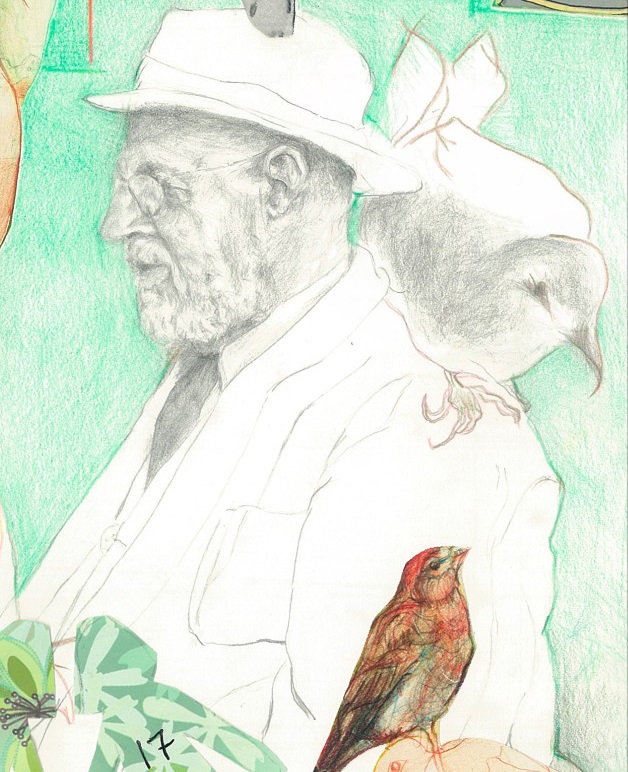
There is mention to female writers who have been through a serious health issue or struggle with a chronic health problem, the kind of constraints that are not self imposed and that one would not desire or wish on others, and how working around these health bottlenecks, one could say, has enabled people to keep creating or how because of these constraints a new era or line of work has come about. British writer, Hilary Mantel, mentioned in the book, has said: “Fortitude…. It means fixity of purpose. It means endurance. It means having the strength to live with what constrains you.” The French artist, Henri Matisse, came to my mind, and how his collage based creations and last period works were the result of him needing to create, while accommodating his health problems and weakened disposition.
The last and important, to my mind, part of the book focuses on collaboration and contentment and how development and growth, but also personal contentment are dependent on the presence of institutions and rules, as well as, collaboration. One example concerning the market and business comes from Africa. Epstein writes about an experienced woman seamstress (taylor), who runs her own small business in Lusaka, the capital of Zambia, and whose growth prospects are undermined by the fact that she can’t work with men because she has been let down or robbed whenever she has collaborated with them. This, writes, Epstein, is a common story among female entrepreneurs in Lusaka, where only a small percentage of women trust men when it comes to business and where they face threats of harassment or violence, as well as, negative stereotypes about their business acumen, which all diminish their bargaining power. Epstein contrasts the situation in Lusaka to Soweto Market, where women feel much safer and do collaborate with men. Economists found that Soweto market had “market chiefs,” elected by fellow marketeers and charged with hearing disputes quickly and enforcing agreements. Through rules cooperation zones are created, where it’s possible for business owners to trust strangers, and as a result both men and women collaborate more, and the collaboration gender gap decreases. Similalry, in 2008, Zambia’s parliament created a small-claims court in the middle of Lusaka, so that business owners could file complaints quickly, cheaply, and without legal representation, where again the gender gap in collaboration not only disappeared but actually flipped, with women collaborating more than men.
However, the problem of lack of cooperation impacts everyone, everywhere negatively, and collaboration is an important aspect of living more broadly, not only of economic development. Successful collaboration relies on trust, a sense of safety and some sense of predictability in strangers’ behaviour, and it is built on norms and institutions, which ultimately are constraints, but are necessary for collaboration in civil society and healthier workplaces and economic markets. Epstein writes that in the sweep of history, impersonal exchange is a modern invention and that getting people to cooperate in what economists call the “trust game” so that there is more for everyone is a challenge at the heart of economic development. He notes that “institutions are the rules of the game in a society, or, more formally, are the humanly devised constraints,” and also are “analogous to the rules of the game in a competitive team sport,” and that if as a society we want to be able to take advantage of the best talent, which may be in the people that are the most vulnerable, then we have to be able to protect the vulnerability that trusting others can cause.
Other terms that Epstein discusses in the book are “maximizing and satisficing” and perfectionism. Herbert Simon, who received the Nobel Prize in economics, claims that people are always faced with imperfect information about their options while equipped with limited ability to anticipate the consequences of their choices, and therefore, rather than “maximize,” or try to make the perfect choice from all available alternatives, we need to “satisfice,” which involves choosing one that is “good enough,” and supporting this choice, since searching for the perfect option often dissipates our already limited cognitive resources, increases stress and discontent, and can also have a paralyzing effect on us. Perfectionism and maximizing are on the rise, and even though they’re not the same, they are related. Epstein refers to studies to support the points made in the book. One, which included over forty thousand students in the US, Canada, and the UK, documented a dramatic increase in recent years in perfectionist tendencies, especially, in “socially prescribed perfectionism,” which is the feeling that you must be flawless to earn others’ approval or acceptance.
There are many more ideas that are explored in the book, but I do need to bring this piece to an end, and so I will briefly list some important remaining themes, like the steep rise in anxiety, depression, and self-harm among young people that has occurred specifically in some of the richest parts of the world, how the atomized normlessness of virtual life is harmful to development, and child development in particular, the best predictors of health, well-being, and longevity, and also, the factors that have led to the crumbling of civic and community engagement, the danger of society-wide desynchronization, how some structures and constraints facilitate our making meaning of our life, and the importance of “narrative values,” like love, compassion, honesty, hospitality, generosity, loyalty, courage, responsibility, ingenuity, integrity, perseverance, curiosity, diligence, humor, and more, which help “guide our choices, lend continuity to our identities, and deepen the meaning of our life stories.” Epstein ends his book by reminding us of the importance of establishing conceptual boundaries that make life manageable, coherent, and meaningful, and of choosing narrative values that help us make sense of our journey.