PART 2                                                          

“To survive, the myths we embrace will surely not rest on the old ways of scapegoating and isolation.” Arthur D. Colman / Up from Scapegoating

“In a very real sense, then, individual and collective development are inextricably intertwined.” Arthur D. Colman

“I do not believe any thoughtful person today can continue to believe that human and world survival is located within a frame that sees individual improvement alone as the unit of change and hope.” Arthur D. Colman

As I mentioned in the previous part of this thread on group dynamics and scapegoating type processes, there are many different aspects to these phenomena and they have been studied in different fields. Also, the mechanism of scpegoating has been studied in different contexts like families, which was my focus in the first part of the previous post, classrooms, workplaces, sports teams, political parties, educational and health contexts, all the way up to state organizations and institutes. Therefore, one could view the theories and observations as complementary and contributing to the broader understanding of this particular mechanism and other group dynamics at a micro and macro level. In today’s post I’ll be mostly referring to Girard’s theory of mimetic desire, scapegoat theory and realistic group conflict theory, among other related topics and material. I am aware that I cannot do justice to all these ideas and topics in two posts, even in two lengthy posts, and I’m not an expert on the topic. I simply hope that perhaps I can provide a little food for critical thought, the same way that the new and old material I’ve been (re) reading has provided for me.

Most things I’ve been reading on scpaegoating make some sort of reference to Rene Girard’s work, so today I’ll begin this post with a brief reference to his theory and ideas. Rene Girard (1923-2015) was a French academic, literary critic, historian, philosopher of social science, and writer of nearly 30 books. He is best known for his theory of mimetic desire and his examination of scapegoating, and has combined literary criticism, philosophy, theology, history, psychology, anthropology and mythology to study contemporary social phenomena and human behaviour.

His theory of mimetic desire basically suggests that humans imitate each others’ desires, and this often leads to rivalry. He claims that desire is not autonomous, but mimetic, meaning humans desire what others desire, and since many individuals desire the same object or status, this then leads to competition and conflict. His theory facilitates our understanding of envy, bullying, (inter) group hostilities and rivalries all the way up to warfare. When mimetic rivalry escalates it can threaten social cohesion or group unity. Girard explores the mechanisms societies have used to maintain order or to remain united, and has explored the  mechanism of scapegoating. Societies, since antiquity, have responded through what he terms as ‘sacred violence,’ which is destructive, but can temporarily dissipate conflict and restore order, a kind of social regulator.

In his book The Scapegoat he explores how communities and groups choose a victim / s to blame for collective problems and conflicts, and uses his theory of mimetic desire to reveal the complex dynamics behind social violence, suggesting that at its core human societies are built on the unstable or fragile foundation of mimetic rivalry that inevitably leads to conflict or violence, and in order to avoid destructive levels of violence and rivalry, communities channel their collective frustration, fear and aggression towards an individual or group, to restore order, to create a distraction from real causes and problems, and also, to mask the true origins of the conflict or discontent. This violence towards the victims is legitimized through myths that obscure the scapegoat’s innocemce or irrelevance.

Girard’s concept of the scapegoat mechanism involves the projection of the collective blame onto an individual or group. The social ostracism or sacrifice of the scapegoated object temporarily diffuses violence and unrest and unites the community through a common enemy kind of process. Stories and myths function as ideological tools that hide the true dynamics and causes, and justify the violence and injustice, so as to protect the perpetrators’ or the collective’s self image and social status. Girard views the Jeudo-Christian religious texts as important in exposing the violence and immorality of the scapegoating mechanism and in revealing the innocence of the victim. In this sense these religious texts and stories like the crucifixion of Jesus invert traditional myths by protraying the victim as unjustly persecuted, and challenge the sacred violence paradigm.

Critical reflections on Girard’s theory and observations suggest that his interdisciplinary approach demonstrates its applicability across eras and cultures; can faciltitate our understanding of root causes of conflicts and violence; can help us recognize scapegooating dynamics within our personal relationships, small groups and larger systems, and thus, advocate or support social justice causes concerning marginalized groups, for instance; evokes sympathy for the scapegoated, challenges our assumptions on violence and justice; can facilitate our understanding of mythology, Greek tragedies, religious stories, literary works, films and art; can help us become conscious of our mimetic desires or scapegoating. On the other hand, it has been suggested that his focus on mimetic desire oversimplifies the complexity of social phenomena and power dynamics.

Scapegoat theory explains how individuals and groups misdirect their frustration and aggression towards selected objects, often not responsible for their difficulties or crises, providing a sense of relief or justification for negative situations. In an introductory article on scapegoat theory at Zimbardo website: https://www.zimbardo.com/scapegoat-theory-psychology-definition-history-examples/, it is claimed that in contemporary society, scapegoating is recognized as a common group dynamic, observed across multiple contexts, from familial disputes and targeting a co-worker for failures in a project, to societal and political conflicts, and that understanding both the mechanisms and implications of scapegoating is essential for addressing the biases and injustices it perpetuates. The choice of the scapegoat is not random, but influenced by power dynamics and biases in society, leading to unfair vilification of those who are often less powerful. This theory demonstrates how individual psychology and societal structures interact.

As I wrote in the previous piece originally the practice of scapegoating involved transferring the sins or negative aspects of a community onto a chosen animal or person, thus absolving the rest of the group from collective guilt, providing a means of (false) catharsis. But the concept and term has evolved since and has also become a psychological construct used to understand group dynamics, and this understanding took place as scholars began “to critically examine how individuals or groups project their own shortcomings or misfortunes onto others as a way to preserve their own self-esteem or maintain social hierarchies.”

In this article there is reference to the work of French sociologist Émile Durkheim, who in the late 19th and early 20th centuries laid the foundation for understanding collective behavior, and the role of rituals in society, as means to reinforce social cohesion. They also refer to Sigmund Freud’s influence on the development of scapegoat theory via his concept of projection, wherein individuals attribute their own undesirable qualities or emotions onto others. Of course, there is reference to social psychologists, Henri Tajfel and John Turner, who have furthered our understanding group processes and scapegoating through their research on social identity and intergroup relations. Their social identity theory highlights how individuals derive a sense of self-worth from their (in)group membership, and how this can lead to prejudice and discrimination against outgroups, making them scapegoats for the ingroup’s dysfunctions or problems.

Scapegoating can occur in any group setting or system, like organizations, institutes, churches, sports teams, workplaces, schools, etc. In a broader context, political scapegoating is a prevalent phenomenon. Scapegoating involves some level of abuse of power and it is pervasive. It occurs left, right and centre, and can be initiated for many reasons: ideological reasons, for power and resources or out of greed and need to control, to maintain a status quo or consolidate hierarchies, to boost economies and increase profit [consider the war / weapon industry], for false belonging or to gain small or bigger priveleges, and simply ‘for a place in the sun,’ as we say in Greece. Inequality, oppressive systems, ignorance, corruption and lack of transparency, can all foster or lead to these kinds of mechanisms. Politicians and others may blame certain groups, for societal issues like poverty, unemployment or crime rates. Through this manipulation of public opinion and scapegoating of certain communities, they can rally their supporters behind a common enemy, distracting from deeper causes, perpetuating discrimination and social division.

Also, scapegoating keps everyone in place, as the scapegoated individual /s is / are turned into an example of what happens to those that do not comply or remain silent, or those that seek more or different, think critically, and so on. In school settings, students might be targeted for bullying or exclusion. The scapegoating provides a false sense of unity among “the bullies,” allowing them to bond over their shared prejudice while diverting attention away from their own insecurities or shortcomings. I might need to add that scapegoating in the workplace or educational settings may not involve straightforward hostility and aggression, but could consist of more complex, subtle and less visible undermining procedures with far reaching damaging effects.

Stereotyping is another term associated with scapegoating dynamics and it involves holding an oversimplified and genralised view of a group of people, and making assumptions or judgments based on limited information of another person or group. It often provides an easily available concept or description of the ‘Other,’and can lead to or excuse scapegoating and discrimination. In realistic (group) conflict theory (read below) it is proposed that as conflict increases, groups often resort to negative stereotypes and perceptions of the out-group, which often serve to dehumanize the other group and justify aggression and discriminatory behaviors.

Realistic (group) conflict theory is a conceptual framework predicated on the assumption that intergroup tensions will occur whenever social groups compete for resources that are scarce or perceived as scarce (food, natural resources, land, jobs, priveleges and opportunities, wealth, social status, political power, military protection, etc.), and that this competition fuels prejudice and antagonistic attitudes that lead to conflict, rivalries and warfare. Feelings of resentment can arise in situations when only one group wins and the other loses. The belief or perception that the ingroups’ interests are in direct opposition to those of another group fuels negative attitudes and behaviors towards the out-group.

Turkish-American social psychologist, Muzafer Sherif’s (1906-1988) classic study, the Robbers Cave Experiment demonstrated the theory in action.This study illustrated how conflict emerges when groups perceive themselves in competition for resources. In this experiment, boys at a summer camp were divided into two groups, and competition was introduced through various activities. Initially, there was minimal conflict; however, as competition intensified over awards and privileges, hostility between the groups increased dramatically. Some key concepts and processes in realistic conflict theory are: Individuals tendency to favor their in-group (the group they belong to) over out-groups (groups they do not belong to). This intergroup bias intensifies during periods of competition over securing resources. One proposed solution to reduce intergroup conflict is the contact hypothesis, which suggests that increased contact between groups under certain conditions (equal status, common goals, and cooperation) can foster positive intergroup relations.

Realistic conflict theory has offered important insights for understanding and managing contemporary intergroup conflicts, and strategies promoting cooperation between groups through shared goals and reduction of economic disparities. However, while this theory has been very influential, it has, like most theories, also received criticisms for certain limitations. For instance, it has been argued that the complexities of conflict have been over simplified, and that there are other factors at play like ideological and cultural differences or historical criticisms contributing to conflict. And there has been criticism concerning its universal applicability, across all cultural contexts.

Education and awareness about the psychological processes underlying intergroup conflict can help reduce negative attitudes, promote empathy, and reduce conflict. Identifying underlying causes like oppression and resource inequalities, and revealing underlying group dynamics and mechanisms, increases clarity, and by understanding the dynamics of scapegoating, we can abstain from such practices and from seeking belonging through common enemy practices, and work towards creating more inclusive and empathetic environments, where there is more transparency around causes, blame is appropriately assigned and collective responsibility is embraced.

Finally, I will end this post with a couple of short extracts from Arthur Colman’s book (see previous post).

On the process of individuation

“Moreover, what may feel like a hero’s “individuation” journey may also be agroup “setup” of an innocent who carries the sins of others. Sometimes the individual walking on the beach is on a journey that will benefit self and others too, and sometimes he or she will be unwittingly caught in the archetype of the scapegoat for the collective; those heroic solitary walks may at times be more in the service of keeping falsehood alive in others than truth alive in oneself. At the heart of such dilemmas is the tendency to separate the individual from the collective and individual development from collective development. Individuation in the adult may begin in separation from the collective, much as individuation in the young child may begin in separation from the parent(s). But separation from the collective is not the aim of individuation; rather, it is one of the paths some people use to learn more about themselves away from the influences of others. In group relations theory, there is a concept known as “group in the mind” which expresses the ever-present group consciousness of individuals even and especially when they are most isolated and functioning most separately from others. We are always collective entities as much as individual entities.”

On interdependence and situatedness

“Individuals require creative collectives for their fulfillment just as collectives require creative individuals for theirs. It is time that we incorporate this mirroring connection between individuals and the group in all our explorations of human nature.”

On the need for a more balanced approach

“The fall of the Inca Empire is a most poignant illustration of the extreme vulnerability of a collective based on the scapegoat/messiah myth. Despite the complexity of this social and religious system and its focus on social justice, it was dependent on a godlike leader whose murder was ruinous to the whole culture. As [Peruvian novelist, journalist, essayist and politician, Mario Vargas] Llosa, and the colonial history of South America, suggests, that kind of collectivity is no match for one based on individual sovereignty. Neither, however, is the verdict in on the ultimate worth of a system that, along with its predatory nature, elevates the individual and individual consciousness to a kind of religion, which justifies cultural genocide.”

On scapegoating in groups

“Groups will create victims rather than face dealing with diversity and difference….

All organizations work hard, consciously and unconsciously, to protect both the scapegoating process and their chosen scapegoats. Consultants and whistle blowers know too well the great danger of meddling with an entrenched scapegoating system. In the Bible story of the scapegoat, the man who takes the scapegoat into the wilderness is in great danger. In practice, the man who speaks the truth about the scapegoat often shares its fate……. Only very courageous or foolhardy individuals or subgroups can stand up to a powerful victim-creating process. To help an organization, the consultant must refocus attention on how the need for a scapegoat and the choice of victim is a diversion from the deeper collective issues.”

The Greek translation is available and the text has been slightly edited (09/11/2025)

The process of scapegoating within families, groups and society at large

“The process of engendering and making possible human community through arbitrary victimization, is called ‘scapegoating mechanism’…” Rene Girard

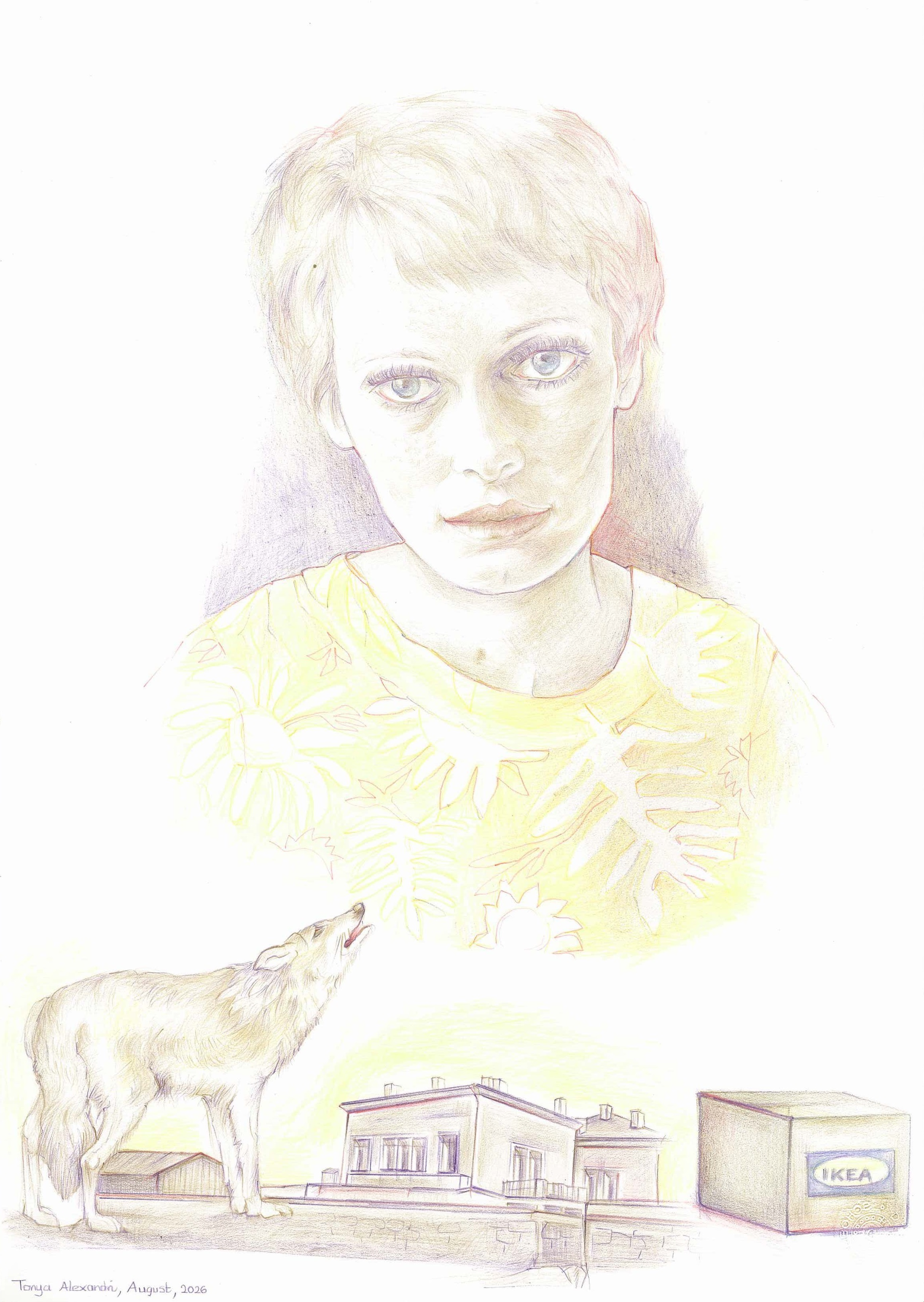
Today’s piece is in some sense a continuation of the previous post, especially of the thread concerning dynamics and imprisoning roles of both family and broader systems. In particular I’ll be focusing on the process of scapegoating within families, larger groups and society at large, and I’ll be drawing from diverse material that I’ve been currently looking at in an attempt to approach the topic from different angles. I’ve also included some artwork I made in October related to the topics discussed below.

Part A

We can’t really understand family systems or small groups without situating them in their broader cultural and sociopolitical contexts. In Michael P. Nichols’text book, Family Therapy: Concepts and Methods, there is an introductory graph that lists the development of Family Therapy over decades, and alongside each new theory, important figure or development in the field, there’s reference to major political events that occurred that year, for instance, in 1945 WWWII ends, in 1953 Stalin dies, in 1954 school segregation in the USA is ruled unconstitutional, in 1966 Indira Gandhi becomes prime minister of India, in 1970 students protest against the Vietnam War, in 1989 the Berlin Wall comes down; in 2001 the September terrorist attack occurs in the USA, in 2003 the USA invade Iraq, in 2009 there is the worldwide economic recession, and so on. Nichols writes: “the view of persons as separate entities, with families acting on them is consistent with the way we experience ourselves…, but it’s hard to see that we are embedded in a network of relationships …”

Also, in discussing role theory, and the various roles and dynamics in families, Nichols notes that we should avoid describing others in terms of single or rigid roles because people are complex, they take on more roles than one, and also, family roles are often complementary and they don’t exist independently of each other. For instance, if there is a domineering person in a system, there will be a submissive one. More functional families, according to Jon Spiegel and his colleagues’s findings, contained relatively few and stable roles (cited in Nichols); however, in more antagonistic or traumatised families less healthy roles are enforced on children and other members. Some terms used to describe these roles are the ‘identified patient’ or ‘parentified child’ or the black sheep or the scapegoat, and the golden child, the healthier or stronger parentified child, may become what is sometimes called the glass child vs the child demanding more attention for a variety of reasons, not necessarily health conditions, the rescuer, the mascot, the one that keeps the peace, the lost child, and so on.

It is important to bear in mind that there will be individual differences, and the terms above are not used as labels, but rather to facilitate our understanding of and capacity to discuss these processes. Moreover, we are all more than our roles or traumas, and with awareness and substantial support, people can step out of these roles in adulthood. Another useful thing to remember is that change in one person or relinquishing of a certain role or way of being in a group changes the whole system in bigger or smaller ways, and more rigid families or groups are more resistant to change and resort more to homeostatic mechanisms. For instance, antagonistic or conflictual relational processes within a family system, may often activate symptom related triangles in order to reestablish stability. Family members and outsiders are often included in this triangulation process in order to maintain homeostasis at any cost. Triangles are not necessarily negative; it is only symptom related triangles that cause harm in families and other systems, and therefore, change often necessitates the awareness of and neutralization of these coalitions.

The most parentified, neglected and less favored child often ends up being scapegoated, carrying the weight of others’ emotional and other unresolved conflicts or intergenerational traumas.The scapegoat can serve as a container, a diversion, keeping the family or other group system from addressing difficult issues within the system. In some sense they become the family system’s soothing mechanism. Often the more compassionate members of a system, the truth tellers or ones that see that things could be otherwise, the less compliant or less demanding and less confrontational and likely to defend themselves, the artists or the more critical thinkers are the more likely to be forced to take on this type of role. Common enemy scapegoats provide a way for small groups like family systems, friend groups, classes, co-workers or much larger groups to manage internal conflicts, aggression, envy, fear and anxiety by projecting blame onto or dehumanizing a member or another group. Another point that is often not discussed adequately is the issue of resources, gains and losses. The scapegoated member of a family, for instance, will be provided with less support and resources, the distribution of resources and attention will be unequal. In larger social groups scapegoated people will be treated unfairly, deprived of resources, undermined, and many will suffer losses of things they have achieved, built, or worked hard for. Aggression against scapegoated people can often involve the undermining of all areas of their life.

Rebecca C. Mandeville’s guide book, Rejected, Shamed, and Blamed: Help and Hope for Adults in the Family Scapegoat Role, concentrates on scapegoated, parentified children. Mandeville notes that the guide is informed by her experience as a Marriage and Family Therapist, counselor and coach of adult survivors of family scapegoating, her qualitative research, and her own experiences of being in this role herself. The basic topics of the book are: How to recognize and identify family scapegoating abuse (FSA: a term coined by her) signs and symptoms; the reasons scapegoated individuals have difficulty recognizing they are being abused / scapegoated; the ways complex trauma (C-PTSD) and betrayal trauma can impede recovery, and how intergenerational trauma and false narratives contribute to scapegoating dynamics; the reasons why the more empathic or truth telling child or family member is more likely to end up scapegoated, and how to reduce fawning behaviors*, recover and realign with one’s truer self. The ‘fawn’ response is an instinctual response associated with a need to avoid conflict and trauma via appeasing behaviors, and was coined by Pete Walker.

Mandeville claims that being the parentified and scapegoated child is usually symptomatic of generations of systemic dysfunction, fueled by unrecognized anxiety and / or trauma. It’s as if, she writes, the nuclear and extended family members are participating in a consensual ‘survival trance’ supported by false narratives, anxiety, and egoic defense mechanisms, such as denial and projection. She adds that for those who do realize that there is another reality outside the one they were inoculated into since infancy, it can be a shock, and the truth can act as a destabilizing force in families that depend on false narratives, control and denial to maintain their equilibrium. She also notes that her more recent research confirms that scapegoating can also begin in adulthood, often initiated by a partner, spouse, employer, friend or other person.

Madeville writes that in Murray Bowen’s family systems theory, families are viewed as emotionally interrelated systems, and scapegoating in a family system is viewed as being a manifestation of unconscious processes whereby the family displaces their collective psychological difficulties, unacknowledged traumas, anger, envy and complexes onto a specific family member. In this way, she says, “the scapegoated child is subjected to rejecting, shaming, and blaming behaviors via what is known as a Family Projection Process.” Scapegoating she notes is a process of dehumanization and is closely related to bullying, and both qualify as overt or covert forms of psycho-emotional abuse. The scapegoated child she says “can be subjected to aggressive domination and intimidation tactics, replete with threats, use of force, or coercion, with no means of escape…… is repeatedly cast into a negative light and portrayed in a one-dimensional manner that denies them their full humanity, with all of the attendant negative and harmful consequences.”

Part of these dynamics might be pitting one sibling against the other to create a camp of ‘allies’ and portaying the targeted child as defective, deserving of the family’s hostility or rejection, and unworthy of love and inclusion. The child that mirrors the parent in gratifying ways or the child that demands more attention may inhabit the role of the ‘golden child.’ This damaging scapegoat narrative, she writes, is distorted and designed to elevate the parent and demean the child, and “is shared within and outside of the family, resulting in siblings, extended family, and friends of the family viewing the scapegoated child through this same distorted, negative lens.” However, she notes many of these people “are invariably intelligent, well educated, and positively contributing to society. Many are quite successful in their personal and professional endeavors and are highly regarded within their communities…..”

She discusses the devastating consequences of being scapegoated, one being complex post-traumatic stress symptomatology and betrayl trauma, devastating ‘smear’ campaigns, defamation of character or damage of reputation, difficulties finding competent professionals (doctors, therapists, counselors, lawyers, etc). There are also challenges related to dis-identifying from the scapegoat narrative and attendant distorted stories, identifying their own wants and needs, expressing themselves authentically and forming secure attachments. Also, as they grow older if they openly reject the family narrative or role they will likely experience increased relational distress, pushback and trauma as a direct consequence of challenging the family projection process and homeostasis (balance) that requires them to remain in the ‘scapegoat’ role.

She focuses on Complex PTSD, which is sometimes interchanged with terms, such as, complex relational trauma, developmental trauma, and interpersonal trauma, as well as, betrayal trauma and Betrayal Trauma Theory (BTT), which was first introduced by Dr. Jennifer J. Freyd in 1994. Betrayal trauma develops in response to relational trauma and is defined as a trauma perpetrated by someone with whom the victim is close to and reliant upon for support and survival. Mandeville writes that “BTT addresses situations in which people or institutions that a person relies upon for protection, resources, and survival violate the trust or well-being of that person (Freyd, 2008).” BTT, she writes, asserts that “betrayal acts as the precursor to dissociation, meaning, the dissociation occurs as a means of preserving the relationship with the primary caregiver or other important family figures the child feels dependent upon for their survival. Because a child must rely on their caregiver for support and safety, they are more likely to dissociate (‘split off’) traumatic experiences from conscious awareness when experiencing betrayals of trust.” Mandeville also talks about disenfranchised grief, a term coined by grief researcher Kenneth J. Doka, which is grief experienced when someone suffers a loss that is not (or cannot) be openly acknowledged, socially sanctioned, or publicly mourned. She states that this disenfranchised grief may be connected to lost family connections: lost community and social connections: and sometimes the need to relocate so as not to be forever stigmatized in a community due to ‘smear campaigns.’

She reflects on causality and says there are no reasons and many reasons why a person may inherit or be assigned dehumanizing, imprisoning, one-dimensional roles. She explores the unconscious effects of intergenerational trauma and explains that the scapegoating of a child or adult is “often (but not always) the result of an unconscious family projection process that supports maladaptive emotional and behavioral coping patterns that are ‘transmitted’ between generations. Mandeville claims that a high percentage of scapegoated people are empaths, and whether the empath has these abilities due to ‘nature’ or ‘nurture’ is still up for debate, more likely a combination of both (I have written about this elsewhere). Scapegoated people also tend to seek, see or tell the truth. They are often the ‘truth tellers’ within a family system, group or community, are more likely to speak out when they see or experience injustices or abuse, are also more sensitive to others’ pain, and may often aspire to other ways of being or want to bring about change.As a result they may be seen as a threat, and therefore, must be de-powered, so as to maintain the family or group narrative intact and those taking part in the scpegoating process blameless.

***********************************************************************************************

Across time we can detect many instances of scapegoating, history is littered with bloody instances of ethnic or religious groups scapegoating other groups. When reality is too complex and problems are difficult to solve, and when there is competition for resources, intergroup hostility increases and projection can provide a temporary relief and outlet. When a nation feels uncertain and when there are serious socioecomomic and political issues, it invents or remembers enemies to put the blame on because fear provides a means to unite, and then pluralism and diversity, justice and democracy are undermined. When groups or societies face strain leaders resort to scapegoating, promising false relief through a common enemy and hostility. Groups also tend to favour their own group (in-group), while viewing outsiders (out-group) with suspicion or hostility, and this can lead to the out-group being scapegoated. Scapegoating also allows a group or individual to maintain a positive sense of self without acknowledging their traumas, aggression and envy, weaknesses, mistakes or bad qualities. It provides an object to displace frustration and aggression, while also strengthening group unity and bonding.

The process of scapegoating often takes problems and facts, distorts and exaggerates beyond recognition and then projects and blames. Medieval crusaders described their wars as defences of Christendom against ‘barbarians,’ colonial empires similarly justified domination, and in the 20th century fascist regimes scapegoated other groups to unite societies. Suffering the consequences of WWI the German Nazis were able through the process of scapegoating, by conjuring envy and hatred toward Jews, to rally Germans to extreme levels of nationalism, unifying them to a singular cause. However, the scapegoat theme is also ever-present in literature; the ancient Greek myths of Oedipus, whose banishment from Thebes ended a plague and restored order and peace, and Iphigenia’s sacrifice by her father, who had angered Artemis, allowed for fair winds (compare with the divinely ordained sacrifice of Jephthah’s daughter); George Orwell’s book; Animal Farm, where one group is scapegoated to maintain control, and his dystopian novel 1984, which depicts an authoritarian surveillance state, where the party needs to constantly create an enemy to present to the masses; William Golding’s Lord of the Flies; Sid Fleischman’s children’s book The Whipping Boy; John Steinbeck, Dostoyevsky, Albert Camus, Doris Lessing, Daphne du Maurier, and so many others, have all used the scapegoat theme.

** A whipping boy was a boy educated alongside a boy prince or monarch, who received corporal punishment for the prince’s transgressions in his presence. The prince was not punished himself because his royal status exceeded that of his tutor, but experiencing the punishment of his friend would supposedly instill fear and motivate him to not repeat his behaviour.

It is suggested that scapegoating, which is as old as humanity, has not changed much with the passing of time, although it has evolved. We can observe a similarity of belief and practice across eras, societies, cultures and religions. Sometimes the role of the scapegoat is forcibly appointed by others, and at other times, a process of self-scapegoating takes place in order to attain personal or collective transcendence. Actually to understand scapegoating we need to also explore religious stories, myths, practices, superstitions, fears and deeper group dynamics and motivations that necessitate finding another to bear the brunt of a group’s / society’s anger, fear, frustrations and guilt, in order to bring a sense of relief at a collective level. I will briefly mention a few examples I came across in the material I’ve looked at while writing this piece. The scapegoat construct in religious stories and practices basically involves burdening a person or animal with all the sins and dysfunctions of a community and then sacrificing or ostracizing it to bring psychological release, to atone for the group or to restore order, end even plagues and droughts. Also, the concept predates contemporary religions and societies and we could probably detect it in all societies and religions all the way back to antiquity and even further back to more primitive societies.

Leviticus 16 recounts the ritual sacrifice that Yahweh (God in Hebrew) commands the Israelites people to perform to atone for the sins of Aron’s son and their own collective sins. A goat is slayed and another goat is released into the wilderness once the people have projected their sins and unwanted aspects of their self onto it, in other words imbued it with the unwanted bad aspects of themselves. Mandeville writes that “the term scapegoat originated from a story in the Old Testament (Leviticus 16: 1-34). In this ancient tale that is associated with the ceremonies of the Day of Atonement, Aaron had to choose a goat to take on the sins of the tribe, i.e., the collective). This goat was then cast out into the desert. A weak, domesticated goat would have likely died a short time after being left to fend for itself. Therefore,  the goat Aaron selected had to be very strong and robust so it could fulfill its purpose of relieving the tribe of its sins.” She adds that even though survivors of scpegoating may feel vulnerable, raw, and worn out as a result of being harassed and deprived of protection of their tribe, it is important to know that “the scapegoat in this story was the most robust, strongest goat in the herd. That is why it was chosen.”

Jesus was appointed the role of the carrier of the sins of the whole world, and could be considered the scapegoat construct of Christianity or the most significant archetypal scapegoat. The scapegoat construct doesn’t only play an important role in Christianity, but probably in most religions to one degree or another. The Japanese Handaka Matsuri, roughly translated as Naked Man Festival is a violent re-enactment of a ritual human sacrifice enshrined in Japanese mythological history. A village suffering a plague, arrested a random man passing through the village, stripped him of his clothes and dragged him to a shrine to be offered as a scapegoat. He was slain for the collective interests of the village. This ceremony is still mimicked as an annual purification method throughout Japan today. It has also been argued that in Buddhism the individual or narrative self, the ego and our desires, could be viewed as a personal scapegoat, which we need to transcend through asceticism or other means,  which is sacrificed to achieve enlightment or the ending of suffering. In Buddhism Siddhartha Gautama has been considered a (self) scapegoat figure. Also, his horse Kanthaka becomes a kind of whipping boy, so that the prince may be spared the punishment, and also a container for his fathers’ emotions. There is also an old Japanese Buddhist practice of self-mummification a slow suicidal process one could say, where monks observed asceticism to the point of inducing their own death through starvation, and thus, entering mummification while alive. In Hinduism, Brahmins historically served as ritual scapegoats, absorbing the badness for their patrons, and so on.

Arthur Colman (see below) claims that the creation of a scapegoat requires a process akin to the psychological mechanisms of projection and projective identification in that it uses an other to contain the darker side or unwanted aspects of oneself or group life, and that a scapegoat could be considered as humanity’s societal vessel for the shadow, a vessel which is, by definition innocent of the burden it assumes. The community practically deceives itself into believing that the victim is the culprit of their problems or communal crisis, and that the persecution or elimination of the victim will restore order or peace. The Christian theologian René Girard, tells us that the Bible reveals, for the first time, that in reality the victim is innocent and unjustly scapegoated. This truth along with the ‘scapegoat mechanism’ inherent in religion had remained concealed up to then. So, within Judaism and later Christianity the concept of victim appears for the very first time in human cultural history, an ethical concern that has shaped the Western world since. To the question of whether this knowledge has put an end to the sacrificial order based on violence in society, Girard answers ‘No’.because in order for a truth to have an impact it must find receptive listeners, and also, people do not change quickly.

Finally, there are different conceptions of the scapegoat (process) within different fields of study, which might be useful to present here very briefly so as to facilitate understanding of this individual and group process. In her PhD thesis (Department of Philosophy McGill University, Montréal, July 2022) Celia Edell outlines the theological, anthropological, and psychoanalytic conceptions of scapegoating. She proposes that in all conceptions, a scapegoat functions as the focal point for blame. Theological conceptions of the scapegoat have tended to split into three directions and the scapegoat is understood a) as expiating guilt though the suffering of an innocent vessel, b) as the cause of all evil that must be expelled from society, c) as ritual exile itself. In anthropological accounts, the mechanism of scapegoating is described as a part of human nature’s drive to resolve communal tension through the purging of a victim, sometimes thought to be the cause of the tension, and at other times chosen at random. In the psychoanalytic tradition, scapegoating has come to mean the protection of one’s own ego by psychological projection of negative qualities onto others. This can occur on the levels of individual psyche and group psychology.

***********************************************************************************************

Another book I’ve been reading in preparation for this post is Up From Scapegoating: Awakening Consciousness in Groups by Arthur Colman, a psychiatrist, clinical professor, depth analyst trained at the C.G. Jung Institute in San Francisco, consultant to groups and leaders, and writer. Colman explains that scapegoating is an ancient activity, “so ancient that there are few primitive societies where evidence of the practice has not been found,” and can be detected anytime there is a transfer of negative attribution from one part of the system to another, or from one part of the system to an object outside the system, in order to fulfill what is perceived to be a unifying survival function for the system as a whole. In chapter one he writes that “unity is the important concept in all scapegoating activity, the scapegoat represents the group’s push towards its own wholeness by excluding its disposable elements,” and includes a quote that defines scapegoating in a chilling way from British Prime Minister Harold Wilson, who in January 1970 said: “a million Ibos tribesman have to die to preserve the unity of Nigeria….” (Jacob, 1987, cited in Colman, 1995, p.216)

Colman discusses how groups struggle to accommodate diversity and will defend themselves against the different or the new or what they might perceive as negative by collectively rejecting this element through the creation of an individual or group scapegoat, and explores ways individuals and groups can grow beyond the old and long standing practice of scapegoating. Colman connects depth psychology with its focus on the individual and individual development to group theory and group development. He takes some of Jung’s basic ideas, Margaret Mahler’s theory of child development, the concept of individuation, unconscious defensive processes, group theory and other concepts, and discusses their relevance to the problems of groups, institutions, and political systems, in times of nuclear and other environmental threats, where every individual’s survival is dependent on the consciousness and decisions of larger groups. He devotes a chapter to how early developmental theories can help us understand the development of group consciousness. He writes: “In the past thirty years, child psychologists interested in studying the development of consciousness have attempted to integrate psychoanalytic theory based on adult speculations about very early states of consciousness…. with field observations of actual infant and child behavior.”

He highlights the significance of language, story and myth, and explains that the way groups learn and grow is mirrored in the myths they embody. He analyzes three central group myths, the scapegoat, the island, and the Round Table, which he notes, “taken together, describe a widespread developmental sequence of group and societal maturation.” The first myth is that of the scapegoat, which is the most pervasive myth of group life, and underlies “the shaky stability of human collective life.” It is, he writes, the myth that helps us justify war through the concept of the enemy, and social inequality through the concept of the underling and the structures of social class. It’s a powerful force in most of our religious, educational, work, and family systems as well. He writes: “Christianity is based on the scapegoat/messiah myth; Islam uses the infidel and the Jihad as two of its sustaining pillars; and Judaism has the chosen people as its central concept. In modern life, scapegoating is the root of major social issues on the campus and in the workplace—sexism and racism. It is part of a basic family pattern which creates abused and victimized children.”

Colman adds that these patterns with which many people now take issue are not new; they are simply recent manifestations of a scapegoating process that goes back to human sacrifice. The basis of the scapegoat myth is this: “the group is not to blame for its problems, its bad feelings, its pain, its defeats, instead these are the responsibility of a particular individual or subgroup—the scapegoat—who is perceived as being fundamentally different from the rest of the group and must be excluded or sacrificed in order for the group to survive and remain whole.” He presents the psychological connections between the roles of the scapegoat in the group and the shadow in the individual, and suggests that just as the individual uses unconscious mechanisms to detoxify and reject unwanted elements from consciousness, so the group uses scapegoating to detoxify and reject negative elements from its consciousness; however, in both cases there’s little growth and development if one’s shadow or the group’s scapegoats are not confronted. He believes that working through and past the scapegoating mechanism is a necessary prelude to achieving a level of group development in which diversity and collective responsibility are encouraged, and it’s only when the group “no longer focuses on saviors, heroes, victims, and enemies but on the contribution of each group member to the collective and the collective to each member, it enters a new level of development.”

The second myth is that of the island. This is beyond the scapegoat phase and the concept here is that the isolated island community is capable of controlling its own destiny without outside help. Its strength depends on group cohesion and homogeneity, which also carries with it a potential for return to the mechanisms of scapegoat mentality, and for paranoia when threatened, and for the outside world, previously either neutral or ignored, becoming the enemy. Colman says the island myth is pervasive in the well-ordered middle class of the Western world and underlies the assumption of self-sufficiency of nations like Switzerland, small towns in mid-western America, and the walled communities of well-to-do urban and suburban enclaves across the world, and also informs the many corporations and organizations that value independence over interdependence. He adds that in such collectives, disability, illness, and even antisocial behavior are tolerated, as long as, they can be viewed as “insider” problems, while those with the same problem that are viewed as “outsiders,” are treated as subhumans.

The island myth, he says, also underlies many authoritarian political structures and different kinds of cults; it is the ethos for fundamentalist communities and nations. It is blind to the crucial contribution of hidden elements such as untouchables and slaves, and is at risk due to its isolation from changing technology and cultural diversity, and from new ideas and resources. Colman refers to the political events of the early 1990s in the former Soviet Union and Eastern Europe that have demonstrated that island communities either regress into repetitive scapegoating to rid themselves of the differences they cannot encompass or are forced to open their boundaries to the outside world and undergo the inevitable and painful transformations to new forms of group development.

However, he concludes, new forms of group development are still sadly lacking and that there have been few human social and political systems that have endured without relying on scapegoating or isolation as major bulwarks to survival, and even large unthreatened groups with almost unlimited resources that have had more chance to develop collectives which contain diversity, like the USA, have relied on both isolation and scapegoating as stabilizing forces at various times and places throughout their histories. The democracies of the twentieth century have also been supported by powerful scapegoating in the forms of racism and sexism. Humanity, he writes, “is still in evolutionary infancy; our ability to kill our own kind even when our survival is not clearly threatened is a glaring example of the aggressive, primitive level of human group development.”

The third myth is the Round Table, which in the Arthurian legends is “in the likeness of the world.” Colman finds this myth more compelling for its combination of authorized leadership, political equality, and a deeply felt group responsibility and connectedness, as well as its commitment to serve not only Table members but the collective as a whole, a commitment that serves both individual and collective. These legends, he writes, are a myth of male group utopia, in which a brotherhood of equals collaborate in the pursuit of truth and social justice, and the Round Table symbolizes the induction of a new societal Self, a new world order, brought about by emphasizing the conjunction of difference—youth and age, various nationalities and talents. However, the Round Table, writes, Colman, is a mirror of the society from which it has emerged and is not free from prejudice, including sexism and classism, and the foibles of humanity are not overcome in Camelot, but the vision is nonetheless a profound one, a commitment to the task of serving both individual and collective.

Today, groups in which the scapegoating or isolating consciousness does not play a central role are rare. Colman poses the question whether the underlying archetype of a society or a whole culture can change, and refers to Jung, who proposed that one or another archetype could become dominant in a society and affect its cultural myths and social structure, and to the nineteenth-century historian Jacob Burkhardt, who demonstrated this principle in his classic study of Renaissance Italy by defining a significant change in societal consciousness as the key to understanding the evolution between the medieval and Renaissance periods of Western history. To survive as a species, Colman writes, the myths we embrace cannot rest on the old ways of scapegoating and isolation, and myths of interdependence, such as Arthur’s Round Table, “carry more hope in a world on which boundaries of air, water, earth, and fire are increasingly more relevant than maps of nations or even the classification of species.”

There are a few more things I’d like to include in this discussion, and therefore, this lengthy piece will be followed by a shorter PART 2.

October 16th, 2025                                                                     Edited 22/10/2025

I haven’t posted anything for a while. I usually manage to post something twice a month, but sometimes life happens. Today’s post refers to a book I’ve been reading recently by Durvasula Ramani, PhD: Don’t you know who I am? It’s an exploration of narcissism; unhealthy entitlement, antagonism and incivility, which she believes are pervasive in our modern cultures and societies for a variety of sociopolitical and cultural reasons that she discusses in the book. The book is very accessible, a background in psychology is not necessary, and actually, it could serve as an overall introduction on these themes. Ramani discusses narcissism and toxicity from many angles, and situates the phenomenon within historical contexts, with an emphasis on the West, particularly America, where she lives. I oscillated between writing a short summary of the book and a longer piece. As you can see, I’ve opted for the longer version, and yet I will only briefly touch upon the basic themes presented and discussed in this 400 page book.

Ramani interestingly begins her book by providing examples of entitled tantrums, drama and toxic behaviours up in the air during plane flights. Any kind of work we produce is always situated and Ramani’s aware of that, and although the issues she explores and analyses are universal and the behaviours she discusses have probably become more prevalent everywhere, she also includes in the conversation her own larger context. She poses the question of whether Americans might be more narcissistic and antagonistic. It seems that there is some research from the USA that suggests that Americans themselves certainly think so, and respondents from around the world have rated Americans as more narcissistic and antagonistic. This, she writes, may be due to the valuation of individualism, uncritical adherence to capitalism and the cultural ethos regarding the pioneer spirit, Calvinistic work ethic, intense adoration of celebrity and penchant for competition. She makes reference to Christopher Lasch, writer, historian and academic, who, she notes, in 1979 wrote “one of the most prescient books on the veering towards more pathological levelsof narcissism.”

The book does not focus on what is termed NPD (Narcissistic Personality Disorder), which is a diagnostic label from the DSM, but rather it embraces a large spectrum of toxic or difficult personality traits and relational patterns, dynamics and behaviours. Ramani clarifies that one of the struggles in her work is finding the right word or term that captures the triangle of narcissism, entitlement, and toxicity, which despite their broad overlap are also independent. She provides definitions for toxic and what we might mean by describing someone as toxic, and is also discerning about the fact that different people may have different experiences of a toxic person. She states that toxic behavior tends to be associated with traits congruent with narcissistic, antagonistic, sociopathic, psychopathic, dysregulated and passive-aggressive personality styles, and that individuals with these traits are overtly or covertly invalidating, deceptive and manipulative, and can in the long run cause great damage. Narcissists, she writes, “change the value of psychological currencies. Compassion, empathy, reciprocity, mutuality, gratitude, and loyalty are the main currencies of healthy and close human relationships…”

She asserts that we should all be concerned with the proliferation of human toxicity, incivility and narcissism in political and corporate leaders and celebrities because this is a bellwether for the rest of society. People do what they see. We’re all, including our children, witnessing or experiencing it, and entitlement, narcissism, incivility, and toxic and abusive human behavior and interactions are becoming the new normal, and it seems that “….the most toxic amongst us appear to be controlling the narrative and shaping our reality.” She writes: “The system is rewarding narcissism and human toxicity in all of its forms right now. It’s hard to sell compassion and empathy in a world that rewards narcissism, psychopathy, incivility, and materialism,” and elsewhere she notes, “We devalue kindness, especially in men, and we characterize compassion and vulnerability as weakness. Having empathy in the current epoch becomes a setup to be manipulated or exploited.”

The book is divided in three parts. In Part I Ramani concentrates on uncovering narcissism and discussing: the five sets of patterns underlying narcissism, some of the various flavors of narcissists, why social media, which is a key means of communication, of learning about the world, and a tool for constructing identity, is the accelerant for the modern toxic and narcissistic world, the three Cs of narcissism, the ways in which our economy, consumerism, and ideas about success all impact the rise of narcissism. She also provides an overview of the different theories on the origins of narcissism.

She describes narcissism as: an interpersonally toxic pattern, characterized by entitlement, grandiosity, lack of empathy, validation seeking, superficiality, interpersonal antagonism, insecurity, contempt, arrogance, poor emotional regulation, out of proportion rage, and it’s a person’s predominant and consistent way of relating with the world. She refers to the disagreement between psychologists, researchers and others, the difficulties in measuring it, the different presentations and combinations of these clusters of traits, and the various models of personality. Work using the Five Factor Model of Personality (McCrae & John, 1992) characterizes narcissists as being high in extraversion and low in agreeableness. This model also describes narcissism as reflecting higher-than-average levels of angry hostility, assertiveness, activity, and excitement seeking, and lower-than-average levels of self-consciousness, warmth, trust, straightforwardness, altruism, compliance, modesty, and tender-mindedness (e.g. empathy) (Campbell and Miller, 2013, cited in Ramani, 2019). It seems that there is a constant need for external validation (‘narcissitic supply’) to offset insecurity and a tendency to become rageful under conditions of frustration, disappointment or stress. This inability to regulate emotions, tolerate distress or experience empathy usually means that in the face of stress or pressure people with more antagonistic personalities will often resort to rage, projection or acting out.

Also, Ramani writes that at the core of it, difficult people and narcissists are insecure; however, they are not only insecure themselves, they flourish under conditions of insecurity and chaos, prey on insecurity, and ultimately create more insecurity in the world. She writes: “…they actually suck out whatever security or sense of self another person has, leaving their victim completely insecure and the narcissist on the search for more validation.” Also, for all of their lack of empathy, they are able to study people and suss out their vulnerabilities and blind spots. She uses the term data-gathering approach. Once they identify someone whom they may want to draw in, they pay very close attention to him or her. They learn that person’s strengths, traumas and vulnerabilities to control, exploit and use against them.

Questions are posed around diagnosing and the medicalization of bad and harmful for others behaviour. Allen Frances notes that a diagnosis for NPD, for instance, doesn’t hold unless the person is experiencing significant emotional, personal, social, or occupational distress. Ramani adds that this list of traits generally reads like a corporate playbook for success, and that the patterns that might facilitate success and fame in a highly competitive world don’t work well in relationships. Toxic, high-conflict and difficult people literally make us psychologically and physically sick through their behaviours.She also refers to the toxicity paradox. She writes: ‘For the amount of time, effort, and money people spend on healthy diets, getting enough sleep, special vitamins, exercising, healthcare, detoxes, and the avoidance of drugs, alcohol, and tobacco—all in the name of promoting health—something is being missed. All of these behaviors are integral to good health; that is true. However, when you take a longer lens and reflect on the amount of money spent on organic food to avoid the toxins of pesticides, or air filters to avoid toxins in the air, or purified water to avoid the toxins in water, or specialized household cleaners to avoid environmental toxins, or lower-emission or electric cars to avoid toxic exhaust emissions, or high-end cosmetics made from carefully sourced ingredients to avoid toxins on the skin, then why do most people keep toxic people in their lives?”

As mentioned so far, the core pillars of narcissism are: lack of empathy, entitlement, grandiosity, validation seeking, and dysregulation. But I found the brief analysis of the five clusters of narcissim a helpful and useful way to understand the many different combinations of toxic patterns found in people. Also, because many of these features are part of everyone’s make up and lie on a continuum, Ramani distinguishes between normal and pathological levels of these qualities, with some exceptions like gaslighting, for instance, which is never acceptable.

Narcissistic traits are broken into five basic areas:

a) The interpersonal features of toxic people and narcissists are often the most challenging and harmful. There are eight typical patterns within a narcissist’s interpersonal features: lack of empathy, manipulation, projection, lying, poor boundaries, jealousy, gaslighting, and controlling. “Narcissists have underdeveloped psychological endoskeletons,” writes Ramani, and “lack of empathy, makes narcissists problematic partners, parents, friends, coworkers…” For narcisssits, she notes, life is a zero sum game and they play it well. While discussing gaslighting she also refers to the phenomenon of gaslighting by proxy, which occurs when other people make excuses for the narcissist or validate their lies. Concerning control she concludes that a toxic person is more likely to view or engage with people as chessboard pawns than to engage with them as human beings with agency and their own will and desires.

b) The behavioral aspects of toxic and / or narcissistic people are the actions and attitudes we can observe. There are four visible behavioural patterns: superficiality, covetousness/envy, being cheap (in spirit as well), and carelessness. She describes carelessness as being ‘psychologically stunted, impulsive, emotionally restricted, and incapable of stepping out of themselves,…,’and adds that it can also imply a devaluation and lack of respect of the other person.

c) Dysregulation: Toxic and narcissistic people cannot control their emotions or tolerate any level of distress, and, in part, that is due to the fact that they regulate their self-esteem from the outside in. Patterns that fall within a narcissist’s dysregulation are: fragility/insecurity, anger/rage, constant validation seeking, inability to be alone, and shame. Ramani interestingly observes that it’s the dynamic of anger and rage that often results in strangers’ tantrums and rageful behaviours (in a restaurant, means of transportation, park, street or other public place) impacting us. She notes that these incidents take a toll on the observers, even though they are not part of the interaction. As for validation seeking, because it’s a way to regulate self esteem, narcissists will ask for it endlessly, but will rarely offer any, and when they do offer validation, it is often in the name of manipulation or to get something they want.

d) Antagonistic features: Ramani writes, that toxic and consistent antagonism feels deeply unsettling and threatening, and negatively affects anyone in the toxic person’s path, whether they are a colleaugue, stranger, partner or family member. There are eight common patterns within a narcissist’s antagonistic repertoire: grandiosity, entitlement, passive aggression, schadenfreude, arrogance, exploitation, failure to take responsibility, and vindictiveness. Schadenfreude is a German word that is defined as “malicious joy,” or as “a feeling of pleasure or satisfaction when something bad happens to someone else.” These people are good at spotting blind spots and gathering information about people’s past and traumas, and then taking advantage of vulnerabilities. Toxic people, writes Ramani, also generally avoid any ownership of bad behavior, and are revisionists and rationalizers. They consistently don’t take responsibility and tend to perceive their behavior as payback or a vindictive quid pro quo. They deflect, lie and enjoy making examples of other people.

e) Cognitive features: There are five main patterns within a narcissist’s cognitive features: paranoid, hypersensitive, lack of insight, skewed sense of justice, and hypocritical. Ramani writes that many narcissists are prone to isms—racism, sexism, nationalism, classism, and that, “just as we are seeing more painful, prejudicial and divisive conversations in the realm of the isms, and even the spewing of what feel like conspiracy theories, we are also observing what appears to be a societal uptick in narcissistic patterns.” She refers to what has been labeled as “healthy cultural paranoia,” which suggests that people that have experienced trauma or violence, people being harassed or living in unsafe neighbourhoods may harbor a loss of trust and suspiciousness, or an extreme caution. Lack of insight reflects very low self-reflection and lack of self-awareness, and it also likely reflects a cognitive error driven by lack of empathy. It is, writes Ramani, “as though the person cannot connect the moral, ethical, and personal dots to recognize that a behavior was “bad” and may have hurt someone, to know that genuine apologies and self-reflection should naturally follow, and to learn from the episode.”

In Part II she looks at the toxic, entitled, and difficult people in our life like partners, family members, in-laws, bosses, coworkers and friends. She notes that interestingly, most people who have one narcissist or toxic person in their lives actually have multiple narcissists or toxic people in their lives. There are many contributing factors to this, one being that ‘it is a riff on a phenomenon called “habituation.” She writes: “In the simplest example of habituation, if we get accustomed to something in our environment—a reward, or even something more noxious, such as noise—over time, we basically adjust to it, and it doesn’t capture our attention, nor do we question it.” Ramani notes that because narcissism is becoming more common it can actually be more difficult to avoid interaction and relationships with more toxic people. She explains that multiple roads get people to their narcissistic and toxic relationships and situations, but work on “co-narcissism” suggests that people who are raised with narcissistic or antagonistic parents become wired to be “pleasers,” to take on a role of providing validation to the people around them often to the point of exhaustion. They are also more likely to become prey for people high on antagonistic traits, and more skilled at being “the delivery people of narcissistic supply.” She also describes what each of these relationships can do to us and how to handle them individually, while, at the same time, understanding the larger context in which they are happening.

In Part III Ramani discusses how to survive in a more narcissistically oriented world and, how to recognise toxic people, how to avoid them when this is possible, how to manage toxic relationships, how to enforce boundaries and break some of the patterns that may be attracting these less agreeable and empathic people, how to retain one’s sanity, preserve one’s sense of humanity, protect oneself and even grow and thrive. She’s critical of the idea of co-dependency, and writes that “It’s a risky paradigm. Co-dependency is a term that originated in the clinical literature on addiction.” Finally, she highlights the need to teach people about these patterns, so they do not enter these relationships in the first place, and the need for self-preservation, because, as she says, these toxic relationships can be “a death by a thousand cuts, prolonged and subtle, until it becomes your normal, and perhaps ultimately your demise,” self-preservation may be our best tool to fight narcissism. She reflects on why it can be so difficult to walk away from these relationships, and also presents some major types of narcissists, even though there are many subtypes depending on which features mentioned above are more pronounced. Ramani writes: “…. when we reflect on the thirty traits that comprise the various facets of narcissistic or difficult / toxic people, it can help to consider the trait that is the most noticeable.” Finally, she concludes that probably, and hopefully, a narcissistic or toxic person won’t have all of these features.

The five major types of narcissists that most people have heard of are: the grandiose; the malignant; covert / vulnerable; the communal and the benign narcissist.

The Grandiose Narcissist tends to be more arrogant, entitled, grandiose, superficial, vain and charming. Ramani suggests that these people tend to be charming and successful, often appear to be “pillars of the community,”and do well as public figures or leaders. Covert or Vulnerable Narcissism, writes Ramani, presents as less grandiose and is a more “stealth” form of narcissism characterized by lack of empathy, projection, entitlement, hypersensitivity, arrogance, passive-aggression, skewed sense of justice, vindictiveness and insecurity. As for Benign Narcissists, Ramani writes that “There is a superficial immaturity to benign narcissists,” and “they may simply be jerks or attention-seeking fools.” Malignant Narcissists [a term coined by Erich Fromm and described as “the root of the most vicious destructiveness and inhumanity”], she writes. are dangerous, and while they may not engage in overt violence, their abuse of power, gaslighting, lack of empathy, slippery ethics and their perception of people as disposable can wreak havoc in others’ lives, and many people in relationships with these people will report experiences that resemble those observed in people with post-traumatic or complex post-trumatic symptomatology, including anxiety, rumination, reliving the experiences, social withdrawal or isolation, nightmares, and hypervigilance. Finally, she refers to the toxic toll on physical health, and even, a potential decrease of one’s longevity.

Communal narcissists are an interesting “category.” They may be generous in their time and energy when taking part in political activism, charitable events, volunteering and supporting different causes, but they are motivated by an intense need for external validation and can “become mini tyrants when doing so.” Ramani comments, “Communal narcissists may seem like they care very much about people facing challenges around the world……,  but in their own life, they can have all of the usual narcissistic relationship patterns, including detachment, lack of empathy, entitlement, and anger,” and they can be quite dictatorial. Anyone ever involved in political campaigns, college political groups or events supporting worthy causes has probably witnessed or experienced this juxtaposition in people, who seem to care for just causes, on the one hand, and can be toxic, controlling and manipulative in personal interactions. And of course, we need to be careful because there are many caring people with healthy motivations that do good and work for positive change in the world, and as Ramani writes, there are “many well-intentioned people who really do put others first and who give the best of themselves and endless uncompensated hours to charitable endeavors.” Finally, she distinguishes between narcissists, sociopaths, and psychopaths, who usually lack capacity for any kind of remorse, and one could say are on the extreme end of a continuum of traits and behaviours.

Entitled People: Unhealthy entitlement falls under the anatgonisitc trait. Ramani claims that the challenge of entitlement is that no one is born this way, in contrast to other traits, like introversion, extraversion and agreeableness that are in part temperamental and, as such, inborn. People mostly learn to feel and behave in entitled ways. She ponders on causes and reasons, one being “an overcorrection in reaction to the more authoritarian, emotionally distant, and even militaristic child-rearing approach of prior generations, with a subsequent focus on chronic self-esteem enhancement.” Also, she notes that the increasing gap between rich and poor in the US and around the world further fosters these assumptions of entitlement, and that wealth can result in what is referred to as “acquired narcissism” or “acquired entitlement,” and a kind of “entitled hypnosis,” in which wealthy and privileged people may become out of touch with reality and what living in the world entails for most people. She writes: “We are increasingly becoming a culture that is cruelly dismissive of those who have “less” and reveres those who have “more” (regardless of how they acquired it). We are in the era of the genetics of luck….” She also explores entitlement from a psychological perspective, and claims that it’s not good for people. For instance, entitled individuals may be less resilient and are more likely to rely on drugs and alcohol to cope with life stressors. She also clarifies that not all people of wealth or privilege are toxic, but highlights the need to consider the problematic distributions of wealth around the world, and I would add the need to create states and structures that increase the chances for a decent life for everyone.

Focusing on the much broader picture Ramani sheds some light on how and why narcissism is a growing trend in our society, fueled by media and social media (a playground for internet trolls that tend to be a mix of covert and malignant narcissism), capitalism and the free market, how we measure success, dissemination of materialistic messages and insecurity, obsession with fame and attention, the shift in values and priorities across contexts and stuructures, like education for instance, where there’s been a shift away from teaching critical thinking, ethics, and empathy. She poses that in our current world having narcissistic traits makes a person more likely to be successful and that being empathic can be economically inefficient. Timothy Judge, and his colleagues (cited in Ramani), have carried out research data that support the idea that that agreeable people tend to earn less money, and this finding is even more pronounced for men.

Ramani explores the contribution of masculine ideology in the current state of affairs, as well. She comments that “most of our history books appear to be stories of masculine ideology gone awry.” She writes that many men never got the opportunity when they were young to learn how to be with or how to regulate their emotions in non toxic ways, and this, she says, has resulted in their emotions coming out in harmful ways both for them and those around them (substance abuse, violence, lack of empathy, poor communication, social withdrawal, and rage). She further explains that narcissism is at its core a deficit in emotional regulation, and that brooding rage and unresolved emotions are often what underlie covert narcissistic patterns. However, she clarifies that while most men and boys are vulnerable to the expectations of traditional ideology, thankfully, many men do not manifest “toxic” masculinity. Even so, the way we socialize boys and men increases the probability of narcissistic and entitled patterns in our society.

Also, she discusses New Age Narcissism, The Secret, crystals and tarot cards, expensive retreats, asking the universe to deliver what you want, putting positive intentions into the universe and chanting the myriad injustices, problems and antagonisms of our current world away. She writes: “Sadness or other difficult emotions become forbidden in these settings, all magically solved by joy and one’s inner light. The fact is that negative mood states sometimes need to be played out. In challenging times, it is okay to question, to feel irritable, and to have a normal reaction to an abnormal situation,” and the irony is that often, “the people promoting these New Age manifestos are business people and are selling only half of a message.” She cautions about the danger of getting sucked into spaces inhabited by grandiose, exploitative and controlling individuals (“enlightened” gurus and yoginis, etc.).

The origins of narcissism and toxic personalities

Part of the book is dedicated to the various theories and the many interacting factors that might lead to one becoming narcissistic, antagonistic and toxic. Broadly toxic and narcissistic people grow out of an interaction between an inborn temperament and their micro and macro environment. I will only very briefly mention the many explanatory theories and potential origins of toxic antagonistic personalities and behaviours. I should mention that it’s wise to bear in mind that there are always many contributing factors, and every person displaying these features will be the result of different combinations of causes and circumstances, and different features will be more pronounced in different people. Categories and theoretical models help us study and understand phenomena, but people are diverse and complex. Ramani claims that “Narcissism evolves from numerous pathways: how a person is parented; the way local communities and community-based entities such as schools interact with a child (sports, other activities, spiritual communities, neighborhoods); the values society imparts to all of us. All of these pathways intersect with an individual’s temperament. Not everyone who is raised in an invalidating environment will develop the same way. And, at some level, all of us are vulnerable to the societal pressures of narcissism.”

In the book there’s an overview of the different approaches and explanatory models concerning these personality types. Ramani refers to Urie Bronfenbrenner’s bioecological model, who basically viewed a nested series of systems that children reside in and examined children’s development through their interaction with their environments and culture. It has also been postulated that there may also be a “biological vulnerability,” which may relate to temperament, emotional regulation, or reactivity. We also know that children learn to regulate themselves, to delay gratification or endure frustration, for instance, and over time, Ramani writes, they may even check in to see whether someone else needs their help. However, this process may be thwarted, to one degree or another, by a variety of factors. Adult individuals high on narcissism often resemble young children. She notes that narcissism “is actually one of those things that you ideally develop out of, not into.” Heinz Kohut focused on the process of mirroring (mentined in the previous post) which requires a parent to be present and appropriately validating. Mirroring entails parents’ offering “emotional mirroring, appropriate approval, and feedback in a consistent and realistic manner.” Parents’ love or good intentions may not always be sufficient. They need support and knowledge / information, and in the absence of these and lack of awareness, there is a always the risk of not adequately addressing a child’s needs or overcompensating.

Additionally, inconsistent mirroring can prevent a child from developing a realistic sense of self and worldview, and Kohut argues, that emotional regulation is also thwarted. Narcissist people project their emotions onto other people, because they are unable to tolerate emotions within themselves, and are prone to disappropriate rage and sudden angry outbursts (much like young children throwing a tantrum). She refers to Otto Kernberg who believes that when children have unempathic, cold or distant parents, they remain emotionally malnourished, which Ramani writes, results in their psychological “insides” never fully developing; therefore, they are forced to develop their outer world. She also reflects on cultural factors that may discourage parental warmth or emotional expression, and cultures that rely on deeply authoritarian models of parenting. Freud and others believe that the origin of narcissism is likely some form of unresolved conflict from childhood that is playing out in adulthood. She quotes Freud who stated that “Whoever loves becomes humble.Those who love, have so to speak, pawned a part of their narcissism.”

Ramani views the process through the lens of various theories. Attachment theory focuses on our earliest relationships with our parents or other early primary caregivers and on the availability and responsivity of the caregiver, as well as, the closeness and connectedness of the contact with the caregiver. Through the lens of humanistic theory it could be argued that narcissistic adults did not receive unconditional love, but had conditions of worth placed on them as children. Instead of simply feeling loved, they felt that love came attached with conditions (they received love if they got good grades, behaved well, were good at sports, or kept quiet). She also presents ideas on the origins of narcissism that have been developed since Freud, Kernberg and Kohut published their work. For instance, Alexander Lowen has postulated that narcissism relates back to shame and humiliation during childhood because the parents were controlling or emotionally cold and distant or chronically critical and invalidating and shaming or they issued disproportionate punishments. This kind of upvringing could result in a child learning that power is the means of managing close relationships and that expression of feelings is a weakness.

Richard Ryan and Tim Kasser address extrinsic and intrinsic value systems as well as materialism, the drive to consume, possess, and show off external objects and achievements, as a central characteristic of narcissism. From a Behaviorist perspective behaviours that are rewarded are repeated and reinforced. Ramani writes: “Narcissism may be a reflection of how children’s behaviors are shaped into adulthood by parents, extended family, teachers, communities, and society at large,” and thus, all of us are vulnerable to this way of acquiring narcissistic behaviours and attitudes. Also, parents and adults model behaviours. Albert Bandura postulated a model called social learning theory, which suggests that children do what they see, especially when the model is a parent, a sibling, a peer, a teacher. He also constructed the idea of “vicarious conditioning,” which suggests that a person will watch a role model person engage in a behavior and then observe the consequences from the environment. So, it is easy for children to learn behaviours such as entitlement, and so on. The book is written in a conversational style and it contains humor. Ramani wonders about “what happens to a generation of children who observed adults buried in devices?”

As for the biology of behavior, Robert Sapolsky makes the observation that the social context around us impacts how our central nervous system works, because it comes down to how we interpret events. Ramani also reflects on the role of society and motivation. She refers to a few motivational theories from the many within the field of psychology, Maslow’s hierarchy of needs, being the most well known perhaps. David McClelland, she writes, believed that a) we learn motivations, and b) there are three motivators we are all driven by: the need for affiliation (belongingness, choosing the needs of the group over individual needs, and avoidance of uncertainty); the need for achievement; and the need for power (a drive for control over others, enjoyment in winning and competition, the pursuit of status and recognition). These needs, she explains, are shaped by our families, cultures, and communities, and by our treatment by these institutions and groups. We’re all driven by these motivating forces to varying degrees, with one of them serving as a dominant motivator. For highly antagonistic individuals, narcissists, sociopaths, psychopaths, and high-conflict, or toxic, individuals, that dominant motivator is the need for power.

Both overindulgence and underindulgence can also be contributing factors. Theodore Millon characterized narcissism as “a disregard for the ‘sovereignty’ of others and believed this derives from the entitlement and the extremes of either overindulgence or neglect or both,” in other words both spoiling and neglecting kids can bring about similar behaviours and attitudes. On the other hand, Ramani reminds us that we should also consider the importance of disposition, temperament, personality, and constitution. We all come into the world with a temperament, which is believed to have a genetic component, which then interacts with the environment, and how each child is supported in managing frustration. She comments that while past generations of parents did get it wrong in many ways, they were far better at letting their children experience disappointment and get through it, and that now we are as parents and a culture, becoming worse and worse at this. She wonders whether we are stuck in a generation of parental over-correction, as mentioned above, in reaction to the more authoritarian, emotionally distant, and even militaristic child-rearing approach of prior generations, over-compensating and trying to engineer optimal outcomes for our children, worrying about the antagonistic world they are entering, and thus, shifting “the focus from building a good, kind, empathic kid to building more of a warrior.”

The author includes dynamics and roles within families in her discussion of origins. In brief, she begins by clarifying that no one gets it just right, since parents’ sadness, worries, circumstances, disappointments, psychological issues, traumas, and distraction, all become part of their children’s developmental story. Old familial patterns are often replayed in numerous ways. Parents with narcissistic, entitled, toxic features can have a long lasting impact on their children’s lives because “Parenting and narcissism do not mix. The key requirements of parenting—consistency, empathy, compromise, sacrifice, self-awareness, discipline, and equanimity…” One common dynamic in families with more narcissistic or antagonistic dynamics is that of a child or family member being parentified or scapegoated or if it’s a daughter being foced into a kind of Cinderella role. This, Ramani writes, “is an extraordinarily painful dynamic for a child, who may feel as though the entire family system is conspiring to bully him or her, and highlights fears of ostracism and isolation. It is not unusual, within a narcissistic family system, in addition to the scapegoated child, for there to also be the “golden child,” a role that is not always a simple one.”

Families and small groups are always embedded within larger systems and they feed on each other, and the child or member of a family singled out as a scapegoat will often experience a systemic driven psychological mobbing or a kind of public punishment and chronic coercive control, with detrimental consequences in all areas of their life. Ramani notes that there can be real fear that, within groups of friends, educational and work settings the scapegoating dynamic may replicate. Rebecca C. Mandeville, who has coined the term FSA (Family Scapegoating Abuse) and has conducted research on this, focuses on topics like family mobbing driven by systemic forces, and systemic workplace mobbing. I’ll probably write more, in future posts, on family systems, roles and dynamics.Roles in more healthy systems might include the roles of nurturing and providing, educating and setting healthy boundaries,  advocating for, teeling the truth and providing insight and the possibilitiy for change.More dysfunctional roles would include children being parentified or viewed as the identified patient, scapegoating, children placed in the role of the golden child, the lost child, the martyr or the glass child, etc. There is also great overlap. For instance, a glass child might be scapegoated or not, depending on the dynamics of the family system.

Meanwhile, there are two great illustrated children’s books, Scapegoat, written by Eva Keyes and illustrated by Aleksandra Szmidt, and Escape Goat, written by Ann Patchett and illustrated by Robin Preiss Glasser, which can help young children understand these undermining and blaming dynamics at home or at school. You can find both stories on YouTube.

The greater targeting of children through advertising; thus, setting children up with a belief system that organizes around consuming and regulating their sense of self through acquisition of objects outside themselves, is also explored in the book. Children are becoming more acquisitive and materialistic, and more extrinsically oriented, at exactly the phase of development when they would be best served by developing their inner worlds and regulatory mechanisms.

There is a lot to be said on the potential reasons for developing a highly antagonistic personality in the book; however, what is important to remember is that similar experiences may impact people and children differently depending on a multitude of converging factors. Ramani sums this process up as, “… the alchemy of our early environments—parental relationships, attachments, rewards, punishments, motivation, and how we are loved—sets the complex architecture for the psychological underpinnings of narcissism. And all of this occurs against the framework of our society, culture, and communities.”

Conclusion

Throughout the book the writer explores how to raise and create people of depth who are empathic and driven by mutuality in their relationships within this new world quest for fame and fortune, and the need for a balanced, responsible approach to social media. She writes: “Parents, educators, and academic and occupational curricula all need to focus on building digital literacy and social skills.” She discusses how to cultivate genuine interpersonal relationships, and writes that we are rarely told to take a really careful look at whether a person is kind or warm. She says, “People who are more inward in their focus, or who are more circumspect and wise, often do not build up their external and charismatic muscles; it’s rare to find both characteristics in the same person. That said, if a person leads with charm and charisma and plenty of confidence, sit up straight and pay cautious attention. Make sure that there is empathy, that entitlement is not at play, that the person is genuine, that there is respect ….”